Ozark, MO – The auto collision repair sector continues to experience significant transformation as advanced vehicle technologies reshape training requirements and career pathways for automotive technicians. New research highlights the critical role of specialized education in preparing professionals to service modern vehicles equipped with complex safety systems and advanced materials.
The shift toward sophisticated vehicle architectures has created urgent demand for trained collision repair professionals. According to the National Safety Council's findings on advanced driver assistance systems adoption, a growing percentage of vehicles now feature safety systems including blind spot monitoring, lane departure alerts, and front crash prevention. Each system requires precise calibration following collision repairs.

Training Infrastructure Expands to Meet Technical Demands
Multiple training pathways now support technicians entering or advancing within the collision repair field. These programs address the technical complexity found in every certified collision repair center that services modern vehicles.
Current Training Options Available to Technicians:
- I-CAR courses provide short to moderate-length training focused on fast advancement and industry recognition
- OEM programs deliver brand-specific repair knowledge for specialty positions
- Technical college programs offer 12 to 18 months of comprehensive foundation training
- Apprenticeship models combine classroom education with hands-on shop experience
Research from ADAS Depot demonstrates that improper calibration can contribute to failures in driver-assist technology, directly affecting road safety. Their insights on ADAS calibration accuracy reveal the sensitivity of modern vehicle systems and the precision required during repairs.
Core Competencies Define Professional Success
Training programs now emphasize multiple technical disciplines that shape long-term career development. These skill categories prepare technicians for work in any auto body collision repair shop environment.
Skill Category | Training Focus | Industry Application |
Structural Repair | Measuring, cutting, bonding, welding techniques | Supports vehicle safety standards |
Non-Structural Repair | Panel work, plastics, cosmetic adjustments | Ensures appearance and functionality |
Electronic Diagnostics | Scanning procedures and code interpretation | Identifies underlying system issues |
ADAS Calibration | Safety system adjustments and verification | Maintains driver-assist accuracy |
Refinishing | Paint systems and color blending | Delivers quality finishes |
Recent industry updates from PR Newswire's feature on I-CAR's advancement of industry standards showcase expanded training access and improved role-based learning paths. The organization's national conference emphasized the importance of structured education in supporting consistent repair outcomes.
As technicians advance, training programs increasingly introduce customer-service tools that certified facilities rely on daily, including digital estimate request systems and structured after-hours drop-off procedures. Understanding these workflows helps technicians operate efficiently in shops that prioritize customer convenience.
Manufacturer-Specific Training Creates Competitive Advantage
OEM training programs focus on unique repair requirements for individual vehicle brands. Each manufacturer utilizes distinct materials and design approaches. Some vehicles feature aluminum structures requiring specialized bonding techniques. Others incorporate proprietary rivets or specific scan tool protocols.
Analysis from CCC Intelligent Solutions highlights how ADAS influences repair workflows and diagnostics. Their research on ADAS impact on vehicle diagnostics explains why accurate calibration procedures matter for both safety and liability concerns.
Career Pathways Offer Multiple Specialization Options
Completed training programs open several distinct career tracks within the collision repair industry. Each pathway aligns with different technical strengths and professional interests.
Available Career Positions:
- Blueprinting and damage analysis roles involve diagnostic scanning and repair documentation
- Structural technician positions focus on high-strength steel and aluminum frame repair
- Refinish technician roles require color-matching expertise and paint application skills
- Calibration specialist positions address electronic safety system adjustments
Collision industry data indicates that more than half of repair jobs involve structural work. This pattern creates consistent demand for trained professionals capable of handling complex structural repairs correctly.
Employer Standards Reflect Industry Complexity
Shops serving as trusted collision repair specialists now expect entry-level technicians to demonstrate specific foundational competencies. These standards ensure quality outcomes and support insurance requirements.
Key Employer Expectations:
- Training credentials that verify course completion
- Procedural knowledge for following OEM guidance
- Basic scan tool proficiency for diagnostic work
- Documentation skills, including repair notes and photographic records
- Team communication abilities that support workflow coordination
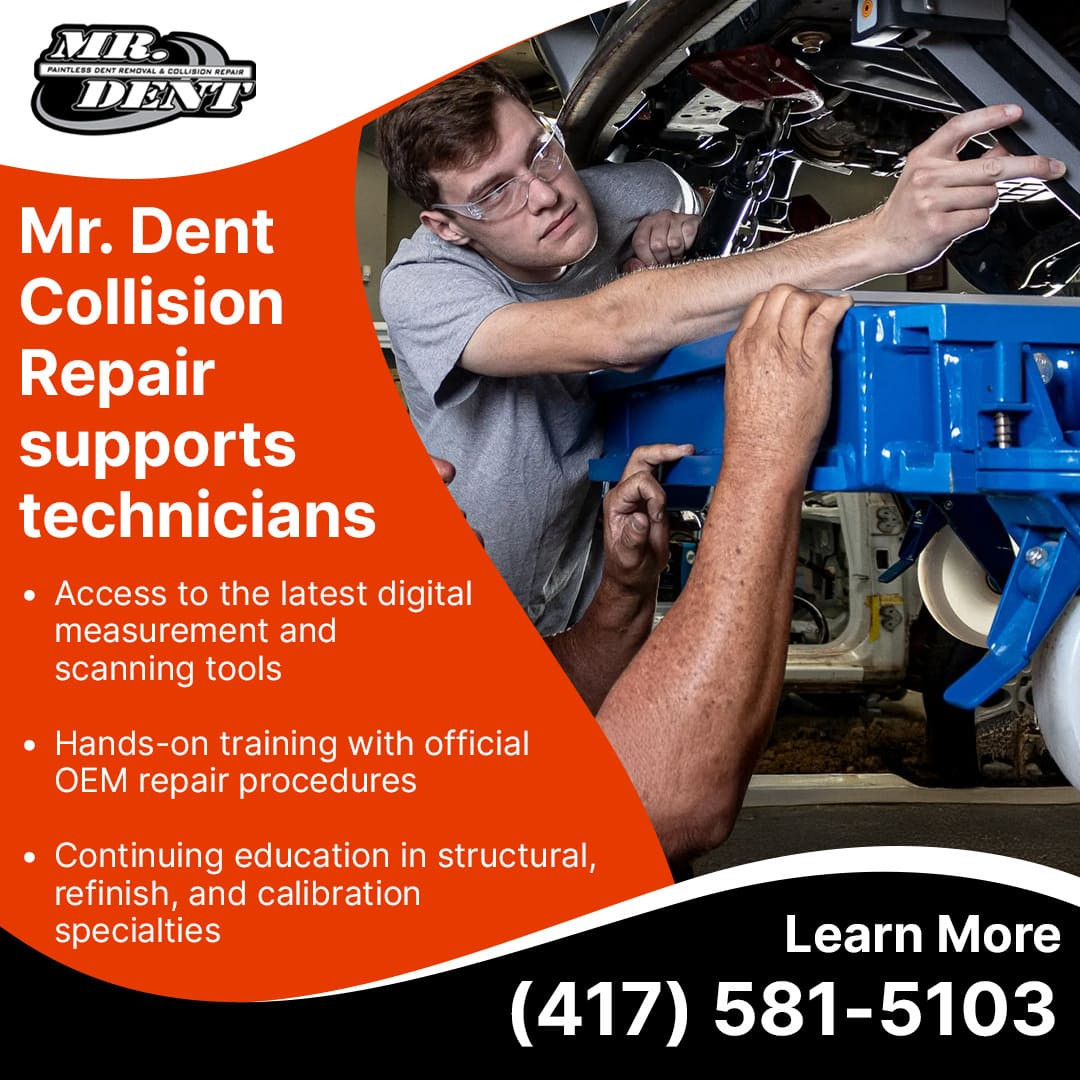
Mr. Dent Collision Repair in Ozark, MO, provides access to modern equipment, including digital measurement systems, advanced scan tools, and professional-grade paint systems. The facility follows OEM repair procedures that help technicians learn real repair standards used across the industry.
The business supports continuing education opportunities in structural repair, calibration, refinishing, and electrical diagnostics. This approach emphasizes long-term professional development rather than short-term job placement.
Launch Your Collision Repair Career with Professional Guidance
Vehicle complexity continues to increase as manufacturers integrate additional safety and connectivity features. This trend creates sustained career opportunities for trained technicians throughout Missouri and creates strong demand for professionals who understand modern repair processes.
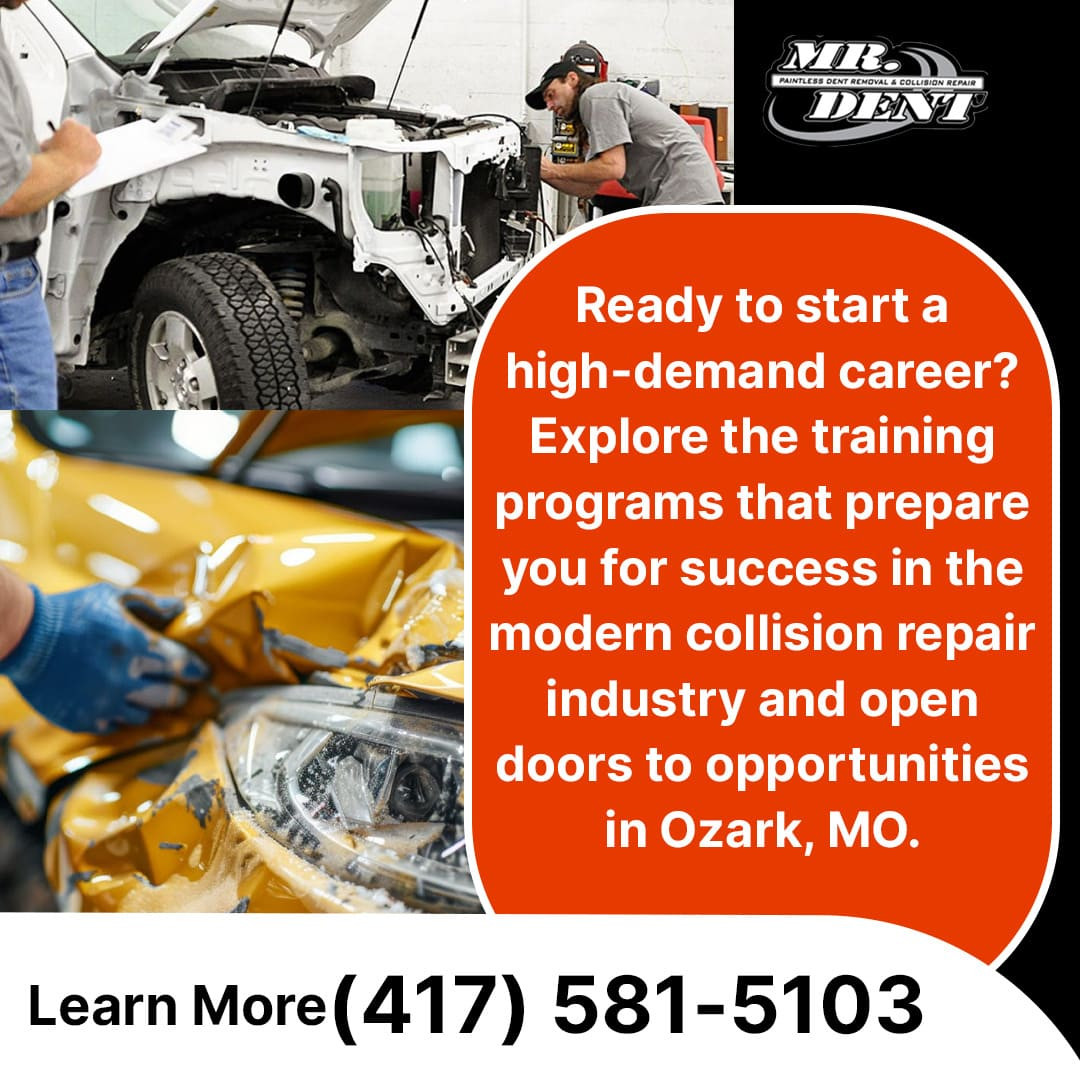
Whether exploring initial training options, seeking guidance on certification pathways, or looking for opportunities to apply newly acquired skills, local collision repair specialists in Ozark, MO, offer direct insight into industry requirements and career advancement strategies. Aspiring technicians benefit from practical information about I-CAR courses, OEM training programs, and technical college pathways that lead to long-term success in a certified collision repair center environment.
Technical education continues to serve as the foundation for successful careers among local collision repair specialists in Ozark, MO. As vehicle technology advances, trained professionals remain essential to maintaining safety standards and repair quality across the industry. Those prepared to invest in comprehensive training will find expanding opportunities in a field that rewards precision, ongoing learning, and technical expertise.

About Mr. Dent Collision Repair
Mr. Dent Collision Repair serves the Ozark region as an auto body collision repair shop that maintains current training standards and modern equipment capabilities. The company works with individuals seeking to build careers through proper skill development and hands-on experience in a certified collision repair center environment.
The facility connects aspiring and established technicians with guidance on training requirements, career pathways, and opportunities available for trusted collision repair specialists in the region. Services include consultation on equipment familiarity, certification priorities, and realistic timelines for entering or advancing within the collision repair field. These services demonstrate how a certified facility supports both technicians and customers throughout the repair experience. In addition, Mr. Dent provides 6-month 0% financing on repairs, giving customers flexible payment options while maintaining high repair standards.
Professionals ready to begin their training journey or advance existing skills can contact Mr. Dent Collision Repair at (417) 581-5103. The team provides direct support for individuals committed to developing the technical expertise required in modern collision repair environments.