
Honda Achieves CarbonNeutral® Building Certification at U.S. Sales Headquarters
SOURCE American Honda Motor Co., Inc.
- Honda U.S. sales headquarters is the first Honda site in North America to achieve CarbonNeutral® building Certification
- Southern California campus reduces annual emissions by over 2,000 metric tons
- Corporate campus in Torrance, Calif., is the first Honda "Innovation Site" driving new approaches to reduce CO2 emissions and other environmental impacts
- Additional initiatives to reduce other environmental impacts include enhanced waste sorting and water-saving upgrades
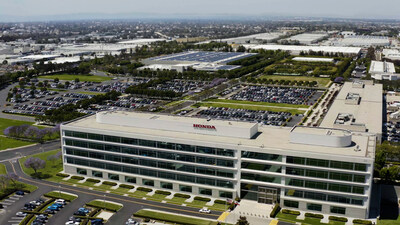
TORRANCE, Calif., Jan. 15, 2026 /PRNewswire/ -- American Honda Motor Co., Inc. today announced that it has achieved CarbonNeutral® building Certification at its U.S. sales headquarters in Torrance, California, marking an important milestone toward the company's broader goal of decarbonizing its products and operations. The Torrance campus is also the first Honda Innovation Site in North America, designated as a proving ground for technologies and processes that could eventually be scaled across Honda operations to further reduce environmental impact.
The achievement of carbon neutrality for Scope 1 direct business activity emissions and Scope 2 indirect emissions from energy use is certified by Climate Impact Partners, which evaluated and assured Honda decarbonization and offsetting initiatives in accordance with The CarbonNeutral Protocol. Learn how Honda achieved the CarbonNeutral® building Certification and reduced other environmental impacts in this video: https://honda.us/CarbonNeutral.
The American Honda Torrance campus spans 101 acres and employs 2,400 associates. It serves as the company's U.S. sales headquarters and includes product design studios, a parts distribution center, a data center and other operations.
"Achieving CarbonNeutral® building Certification at our U.S. sales headquarters establishes a blueprint for our Honda Innovation Site concept, helping accelerate the decarbonization of Honda operations across North America," said James Reeves, director of Sustainability Strategy at American Honda Motor Co., Inc. "Our Honda campus in Torrance demonstrates how renewable energy and smart building upgrades can deliver measurable carbon reductions while fostering a culture where every associate contributes to our company's environmental goals."
Honda Innovation Site Initiatives
Honda has reduced annual carbon emissions at its Innovation Site by more than 2,000 metric tons through on-site upgrades and an additional 2,600 metric tons through renewable energy initiatives. Residual emissions have been offset through the purchase of verified carbon credits. The following initiatives contributed to Honda earning the CarbonNeutral® building Certification:
- On-site solar generation: The campus operates one of Southern California's largest on-site solar arrays, producing 3,300 megawatt hours (MWh) annually to supply 22% of its power requirements.
- Energy-efficient lighting: Electricity use is reduced through 100% use of LED fixtures and light sensors.
- Heating and cooling efficiency: Improvements to the heating and cooling water distribution loop reduce energy consumption.
- Virtual Power Purchase Agreement (VPPA): A portion of a 120-megawatt VPPA adds clean energy to the grid, addressing an additional 2,600 metric tons of emissions.
- Carbon offsets: Compensating for emissions that cannot yet be eliminated, high-quality carbon credits – resulting in 1,800 metric tons of soil carbon removals – were purchased to reduce emissions through regenerative agriculture practices.
In addition to achieving carbon neutrality, the Torrance Innovation Site has implemented several initiatives that the company will seek to replicate at other Honda sites to advance the company's broader environmental goals, including:
- Waste diversion: Enhanced recycling systems, including waste sorting in cafeterias with composting and eliminating single-use plastic water bottles, divert an average of 95% of campus waste from landfills annually.
- Water conservation: Water-saving upgrades, including motion-activated faucets and efficient drip irrigation systems, significantly reduce water use.
- Biodiversity: A new pollinator garden increases biodiversity by creating habitats for birds, bees and butterflies while offering associates a space to reconnect with nature.
- Associate engagement: Honda associates are actively reducing the environmental impact of the Torrance Innovation Site by proposing new conservation initiatives, participating in campus engagement programs, supporting waste sorting practices, and cataloging bird, insect and flower species flourishing on campus.
Reducing Scope 3 Emissions Through Product and Supply Chain Transformation
To reduce Scope 3 emissions from customer use of products and supplier operations, Honda is transforming its products and value chain. Honda continues to pursue its goal of making battery-electric and fuel cell-electric vehicles represent 100% of its global vehicle sales by 2040 while also developing a circular value chain that recovers materials from end-of-life products for reuse across Honda's supply chain. These actions, combined with clean energy initiatives and collaboration with Honda suppliers to cut their emissions, help accelerate progress toward the company's global decarbonization goals.
Learn more about Honda's efforts to reduce emissions and advance decarbonization of its products and operations at https://honda.com/environment.
About the Honda Commitment to the Environment
Based on its longstanding commitment to the environment, Honda is working to reduce the environmental impact of its products and operations in three critical action areas:?decarbonization, reducing CO2 emissions from all products and corporate activities; clean energy, using carbon-free energy sources; and resource circularity, maximizing the use of recycled and biomass materials, and converting end-of-life products back into raw materials for reuse in the supply chain.
Honda is striving to make battery-electric and fuel cell-electric vehicles represent 100% of auto sales globally by 2040, with a near-term focus on increasing sales of hybrid-electric vehicles, while also beginning the electrification of Honda powersports and power equipment product lineups. To reduce the environmental impact of its business operations, Honda is sourcing renewable energy to address CO2 emissions from its North American operations through long-term virtual power purchase agreements (VPPAs) for carbon-free wind and solar power that cover more than 80% of the electricity Honda uses in North America.
Honda efforts also focus on decarbonization of its operations, including offices, warehouses, and manufacturing facilities and supporting its suppliers and independent dealerships across North America in their decarbonization efforts through the Honda Green Excellence Academy and Honda Environmental Leadership Program, respectively.
About Climate Impact Partners
Climate Impact Partners is the trusted partner for organizations taking ambitious climate action. With 27+ years of experience, they've helped leading businesses reduce more than 150 million tons of CO2e, turning climate ambition into measurable results.
They deliver high-quality carbon market solutions: developing and financing impactful projects, managing carbon credit and energy attribute certificate portfolios, and helping companies put a price on carbon to drive change.
By connecting corporates, governments, innovators, and project partners, they accelerate investment in climate solutions that deliver verified impact and advance progress toward net-zero goals.
About CarbonNeutral® certification
CarbonNeutral® certification was created and is managed by Climate ImpactPartners. It was the first clear set of guidelines for businesses to achieve carbon neutrality back in 2002, and every year since then Climate Impact Partners has continued its commitment to providing a robust framework for clear, transparent and high-quality technical carbon neutral action. The CarbonNeutral Protocol is a publicly available document that sets out the requirements for companies to achieve CarbonNeutral® certification. It is updated annually with input from an Advisory Council of external experts to ensure it reflects the latest industry and scientific best practice.
Find out more at: https://www.carbonneutral.com.

 View original content to download multimedia:https://www.prnewswire.com/news-releases/honda-achieves-carbonneutral-building-certification-at-us-sales-headquarters-302662321.html

©PR Newswire. All Rights Reserved.
Information contained on this page is provided by an independent third-party content provider. XPRMedia and this Site make no warranties or representations in connection therewith. If you are affiliated with this page and would like it removed please contact [email protected]
