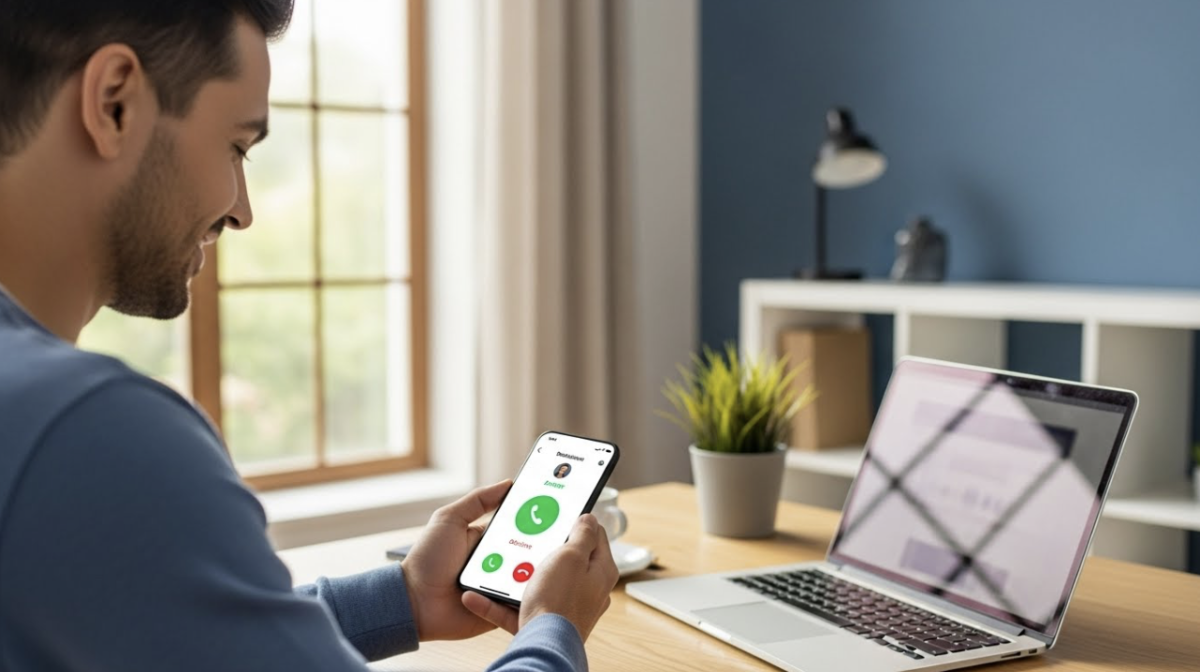

Remote teams that separate work and personal calls see measurable gains in focus, professionalism, and work-life balance.
A dedicated business line eliminates the chaos of mixing personal and professional communications on a single device.
Virtual business numbers give distributed teams a unified presence regardless of physical location.
Multi-line phone systems offer advanced features that personal cell plans can't match.
The right second phone number setup costs far less than a second device while delivering enterprise-grade capabilities.
If your remote team still juggles business calls on personal phones, you're sacrificing both productivity and professional credibility every single day.
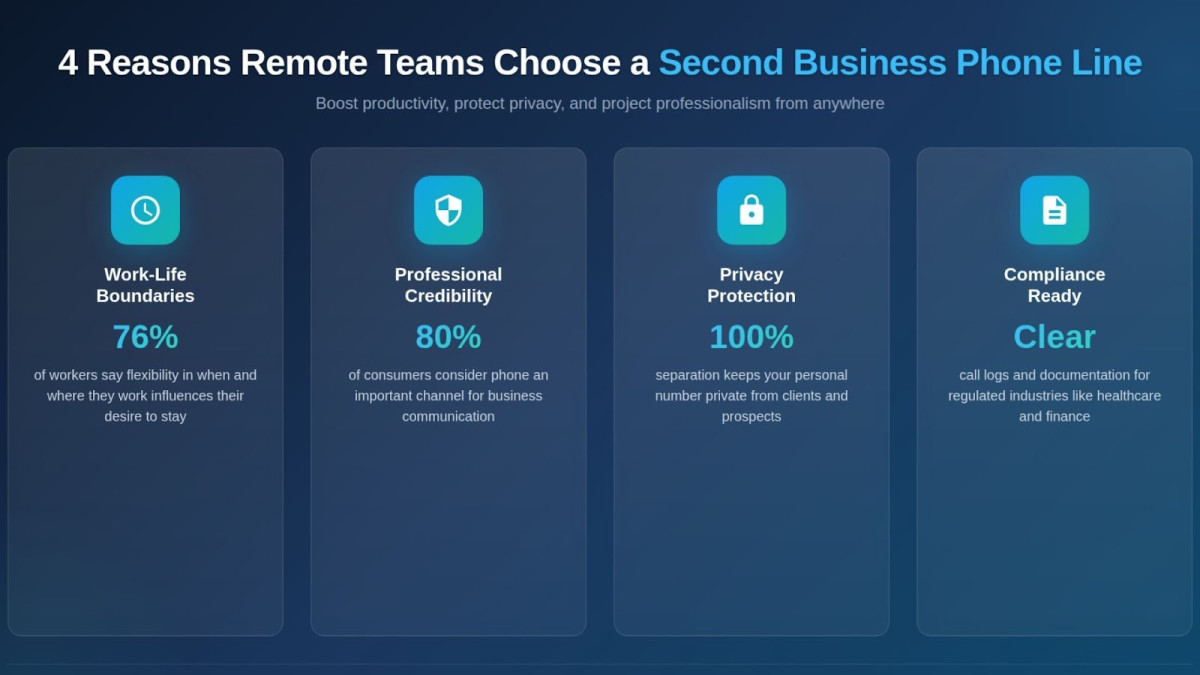
Remote work has altered how small businesses communicate. While most teams quickly adopted video conferencing and project management tools, many overlooked a critical piece of the productivity puzzle: phone communication. Nearly 80% of consumers still consider the phone an important channel for communicating with businesses. Yet countless remote teams continue using personal cell phones for client calls, creating a tangled mess of missed opportunities and blurred boundaries that drains productivity and damages professional business communications.
A second business phone line elegantly solves this problem. It gives your distributed team a dedicated, professional presence without requiring additional hardware, complicated installations, or the expense of issuing company phones to every employee.
What Exactly Is a Second Business Phone Line?
A second business phone line is a dedicated phone number used exclusively for work purposes, separate from personal mobile numbers. Unlike the landlines of decades past, modern business lines operate through Voice over Internet Protocol technology, meaning they work anywhere you have an internet connection.
The most practical implementation for remote teams involves virtual phone systems that add a second phone number to existing smartphones or computers. Your team members keep their personal devices but gain access to a completely separate line with its own voicemail, call history, and communication trail. When a client calls your business number, it rings through the dedicated business app rather than interrupting personal time with the standard phone dialer.
This separation matters more than most business owners realize. When personal and professional calls come through the same channel, team members can't easily distinguish between an important client and a personal contact before answering. They can't set different availability hours. They can't maintain professional voicemail greetings without confusing friends and family. The result is either constant professional availability that leads to burnout or inconsistent client experiences that damage your reputation.
Why Are Remote Teams Switching to Dedicated Business Lines?
The shift toward distributed workforces accelerated over the past few years, and communication challenges came into sharp focus. Teams discovered that while collaboration tools handled project coordination well, phone communication needed a smarter solution.
Establishing Clear Work-Life Boundaries
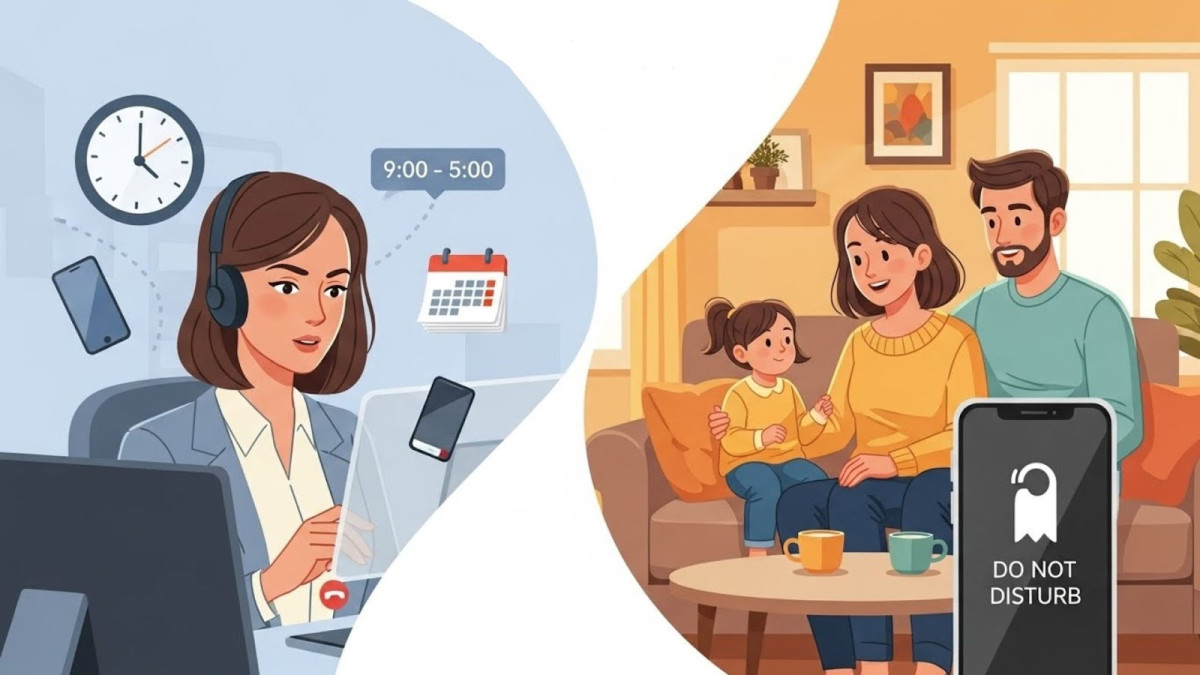
Remote work's biggest benefit can also become its greatest liability. The flexibility to work from anywhere quickly transforms into the expectation to be available everywhere, at all times. Robert Half's 2025 workplace research found that 76% of workers say having location and schedule flexibility directly influences their desire to stay with an employer. That flexibility becomes meaningless, however, when personal devices blur every boundary between professional obligations and personal time. A second business phone line creates exactly the hard boundary remote workers need to protect.
With a virtual business number, team members can configure business hours directly within their phone system. Calls outside those hours go straight to a professional voicemail message rather than ringing through to disturb dinner or weekend activities. This structured separation helps prevent the burnout that plagues remote workers who feel constantly tethered to their jobs. When 70% of job seekers specifically prefer work arrangements that include flexibility, providing the tools that make that flexibility sustainable becomes a competitive advantage for retention and recruitment alike.
Building Professional Credibility
Clients and prospects form immediate impressions based on how you communicate. A business calling from a local number with a professional greeting signals stability and legitimacy. A call from a random personal cell number signals the opposite.
When your team uses a unified business number system, every outbound call displays consistent caller identification. Clients learn to recognize and trust your business number, increasing answer rates for important calls. This consistency becomes especially valuable for sales teams and customer service representatives whose success depends on connecting with contacts.
Protecting Personal Privacy
Using a personal phone number for business exposes team members in ways that create legitimate concerns. Clients have your direct personal number forever, even if they become problematic. Spam increases substantially once a personal number circulates publicly. There's no way to screen business calls separately from personal ones.
A dedicated business line keeps personal numbers private while still allowing full professional communication. If a client relationship turns sour or a number gets added to spam lists, the business line can be changed without disrupting personal contacts or requiring a new personal phone number.
Maintaining Compliance and Documentation
Many industries require documentation of client communications for compliance purposes. Mixing business calls with personal ones makes this documentation nearly impossible to properly maintain. A second business phone line creates a clear audit trail with call logs, recordings when permitted, and organized voicemail archives that satisfy regulatory requirements.
Healthcare providers, financial advisors, legal professionals, and other regulated industries find this separation essential rather than optional. The clean documentation a dedicated business phone system provides can mean the difference between compliance and costly violations.
What Are the Essential Features in a Multi-Line Phone System for Remote Teams?
Not all business phone solutions deliver equal value for distributed teams. When evaluating options, prioritize these capabilities that address remote work's unique challenges.
Mobile and Desktop Applications: Your team needs seamless access across devices. The best systems offer native mobile apps for iOS and Android alongside desktop applications, allowing team members to work from their preferred device without missing calls.
Customizable Business Hours: Setting specific hours when the business line accepts calls versus sends callers to voicemail protects work-life balance. Look for systems offering different schedules for different days, holiday settings, and per-user customization.
Call Forwarding and Routing: A multi-line phone system should intelligently route incoming calls based on time, caller identity, or department selection. This ensures customers reach the right person quickly without requiring a receptionist.
Professional Voicemail with Transcription: Text transcriptions of voicemail messages let team members quickly scan messages without listening to each one. Email delivery of voicemails ensures nothing gets missed during busy periods.
Team Collaboration Features: The best virtual business number systems allow shared lines among team members, transfer calls between colleagues, and provide unified contact management that everyone can access.
Video Meeting Integration: Modern business communication extends beyond voice calls. Systems that incorporate video conferencing alongside phone capabilities give remote teams everything they need in one platform.
How Can a Virtual Business Number Improve Team Communication?
Beyond individual productivity gains, a unified phone system transforms how remote teams function together. The impact extends across internal collaboration and external client relationships.

Unified Team Presence
When every team member operates from the same phone system, clients experience consistent professionalism regardless of whom they reach. Call transfers happen seamlessly. Contact information stays organized centrally. New team members get up to speed quickly with access to shared communication history.
This unified presence matters especially for small teams where multiple people might handle different aspects of a client relationship. Without a shared system, important context gets lost as calls bounce between personal phones with no shared visibility.
Improved Response Coordination
Missed calls represent missed opportunities. A multi-line phone system gives teams tools to ensure calls get answered even when individual members are unavailable. Calls can ring multiple team members simultaneously or sequentially until someone picks up. Dedicated queues can hold callers during high-volume periods. Automatic callbacks can reach out when someone becomes available.
These coordination features turn a collection of individuals working remotely into a cohesive team that handles communication as efficiently as any traditional office.
Better Analytics and Performance Visibility
Understanding communication patterns helps teams improve over time. Modern virtual phone systems provide analytics showing call volumes, response times, peak hours, and individual performance metrics. This visibility helps managers identify bottlenecks, allocate resources appropriately, and recognize strong performers.
For sales teams especially, these analytics connect phone activity to business outcomes in ways that personal cell phone logs never could.
Frequently Asked Questions
Can I use a second phone number on my existing smartphone?
Yes, virtual phone systems work through apps installed on your current device. You don't need a second physical phone. The business app runs alongside your regular phone function, keeping communications completely separate while using the same hardware.
How much does a second business phone line typically cost?
Virtual phone systems for small businesses typically range from $10 to $25 per user monthly for basic features, significantly less than issuing second devices or maintaining traditional phone lines. Most providers offer tiered plans based on features and usage levels.
Will clients know I'm using a virtual number rather than a traditional line?
No. Calls from virtual business numbers appear identical to traditional calls. Clients see your business number on their caller ID and experience the same call quality. The technology is completely transparent to the people you're communicating with.
What happens to my second phone number if I change providers?
Most virtual phone systems allow number porting, meaning you can transfer your established business number to a new provider if needed. This protects the investment you've made in building recognition around your business number.
Can multiple team members share the same business phone number?
Yes, this is a key advantage of modern virtual phone systems. Incoming calls to a shared number can ring multiple team members, be distributed among a team based on availability, or be routed based on caller selections from a menu. This flexibility lets small teams provide coverage that matches much larger organizations.
Strengthen Your Remote Team's Communication Foundation
The difference between remote teams that thrive and those that struggle often comes down to communication infrastructure. A second business phone line addresses the fundamental challenge of maintaining professional, organized, boundary-respecting phone communication when your team works from anywhere.
The technology has evolved to make this remarkably simple and affordable. Virtual phone systems eliminate the hardware costs and complexity that once made dedicated business lines impractical for small teams. Today, getting your team set up with proper phone capabilities takes minutes rather than days. Phone.com offers remote teams exactly this kind of streamlined business phone solution with features designed for distributed work.