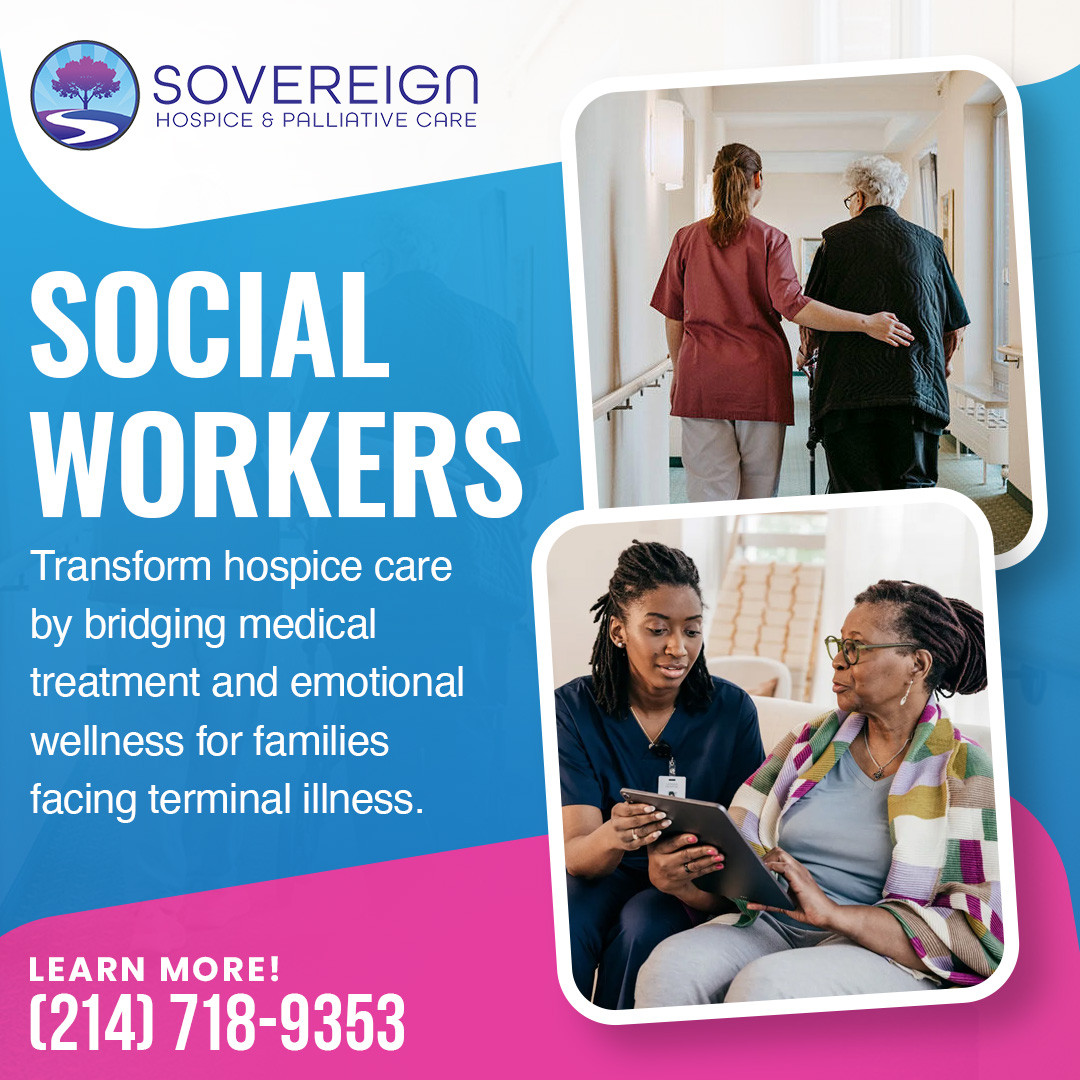

Aubrey, TX– Social workers play a transformative role in hospice care by bridging the gap between medical treatment and emotional wellness for patients and families. These trained professionals address the complex psychosocial needs that emerge during end-of-life care, providing services that extend far beyond traditional medical symptom management. In the DFW Metroplex region, Sovereign Hospice has built its interdisciplinary care model around this principle, integrating social workers as key team members who support families throughout the Dallas-Fort Worth Metroplex.

How Social Workers Support Hospice Patients and Families
Social workers in hospice settings serve multiple roles as advocates, counselors, and resource coordinators. They assess how terminal illness affects family dynamics, emotional health, and practical concerns while helping families understand treatment options and prepare for difficult decisions ahead.
Research from the National Cancer Institute demonstrates that social work involvement improves patient outcomes in hospice care settings. These professionals use their training in human behavior and family systems to provide targeted interventions that address the unique challenges families face during terminal illness.
Patient Advocacy and Rights Protection
Social workers protect patients' rights and amplify their voices when patients cannot speak for themselves. They verify that patients receive appropriate care, understand their available options, and have their wishes respected throughout the hospice care journey.
A nationwide job analysis published by the University of Louisville identified performing psychosocial evaluations as the most important task for hospice social workers. These evaluations assess the current quality of life, coping skills, and family dynamics that influence care decisions.
Professional Counseling Services
Professional counseling forms a cornerstone of social work practice in hospice care. Social workers provide individual and family counseling sessions that address grief, anxiety, depression, and relationship conflicts. Their specialized training in end-of-life issues enables them to guide families through the emotional complexities of terminal illness.
Counseling services include anticipatory grief support that helps families process loss while their loved one is still alive. This preparation makes the actual death experience more manageable and less traumatic for surviving family members.
Interdisciplinary Team Collaboration
Working with Medical Professionals
Social workers collaborate closely with physicians, nurses, and other healthcare professionals to address the full spectrum of patient needs. They share psychosocial evaluations that inform medical decisions and advocate for treatments that align with patient values.
This collaboration creates more personalized and effective care plans that consider both medical symptoms and emotional well-being. Social workers bring valuable insights about family dynamics and coping resources that medical professionals might otherwise overlook.
Community Resource Coordination
Beyond direct counseling, social workers connect families with community resources that improve care quality. They coordinate services and maintain extensive knowledge of local resources, from government programs to charitable organizations.
Key coordination services include:
Respite care and volunteer companionship programs
Support groups for patients and family members
Home modifications and medical equipment assistance
Transportation services for medical appointments
Specialized Training and Professional Development
Social workers in hospice care must complete Master of Social Work programs and obtain state licensure. Many pursue additional certification through organizations like the Advanced Palliative and Hospice Social Work Certification program.
Educational Requirements
The certification process involves the study of grief theory, family dynamics, medical terminology, and ethics specific to hospice care. Social workers must demonstrate competency in assessment, intervention, and outcomes measurement related to end-of-life issues.
Ongoing professional development keeps hospice social workers current with best practices and emerging research. They attend conferences, complete specialized training modules, and participate in peer consultation to improve their skills continuously.
24/7 Support Availability
Hospice social workers recognize that emotional crises and family stress do not follow conventional schedules. Many hospice programs provide round-the-clock access to social work consultation and intervention services.
On-call social workers can provide phone counseling, crisis intervention, and coordination of additional support resources. This immediate response capability prevents numerous emergency room visits and helps families manage difficult situations at home.
Finding Quality Hospice Care Services in DFW

When seeking hospice near you, families should prioritize programs that integrate dedicated social work professionals as team members. Quality hospice care addresses physical symptoms alongside emotional, social, and spiritual needs through interdisciplinary services.
For families seeking hospice services in the Dallas-Fort Worth Metroplex, programs with experienced social workers offer the advocacy, counseling, and community connections that make the difference between managing symptoms and truly supporting families through terminal illness. Contact Sovereign Hospice at (214) 718-9353 or [email protected] for additional information about their interdisciplinary approach to end-of-life care.