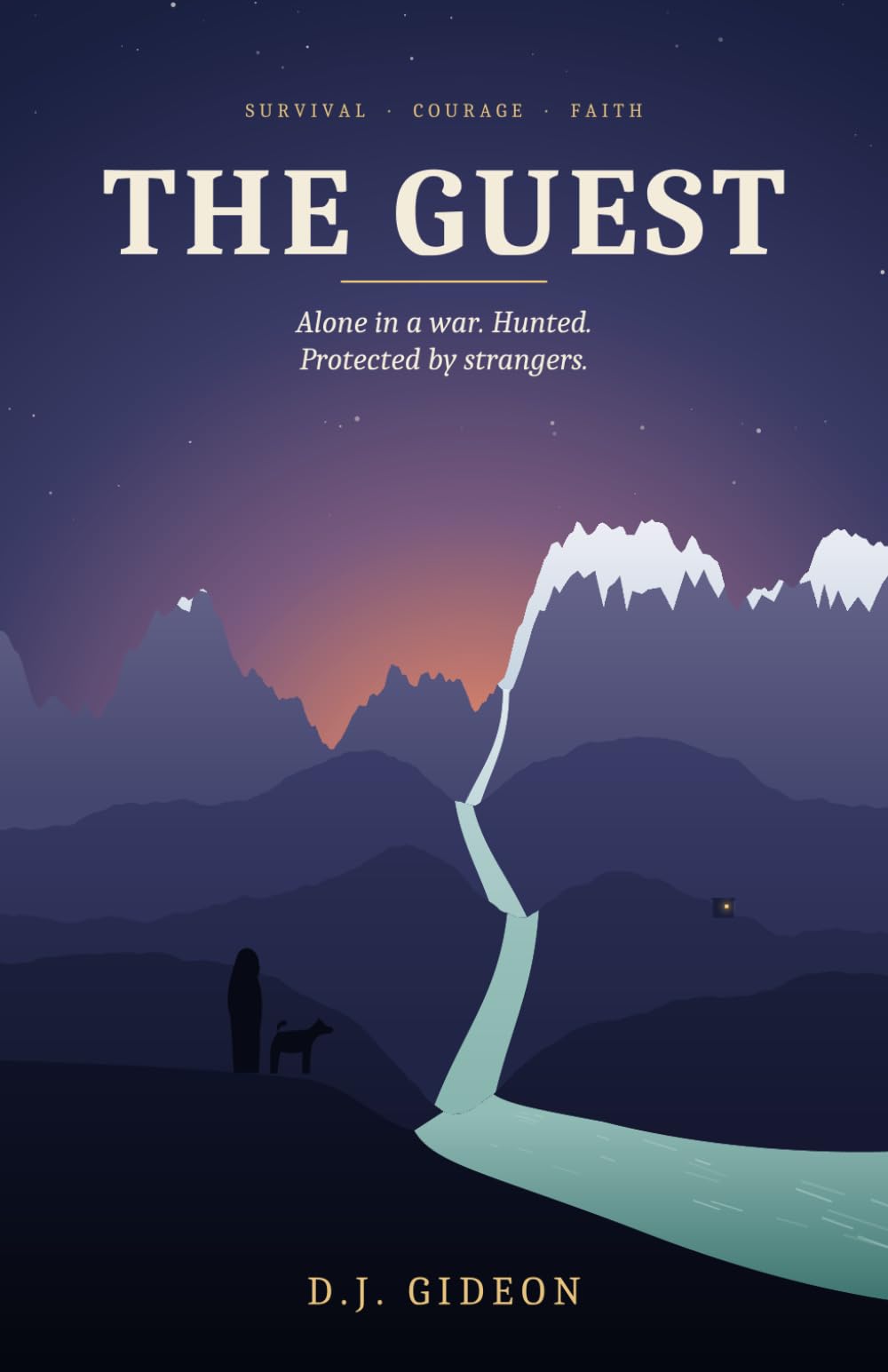

Set in Pakistan, the teen survival novel turns a Pashtun grandfather’s duty of hospitality into a decision with potentially life-threatening consequences.
NEW YORK CITY, NY, UNITED STATES, November 11, 2026 /EINPresswire.com/ — In D.J. Gideon’s The Guest, a thirteen-year-old American’s escape from an attack places a difficult decision before the family that finds her. Clara Hale comes to Pakistan to hand out soccer balls. After a road explosion leaves her separated from her aunt and pursued by the attackers, her survival depends on people she does not know.
Clara’s aunt is taken, their driver is killed, and the men responsible are hunting the girl who escaped. Her predicament combines the immediate need to survive with uncertainty about whom to trust. Getting away from the attack has not brought her to safety; it has left her alone in unfamiliar mountains along a border at war.
The few things Clara carries give that isolation a concrete scale: a steel water bottle, a silver space blanket, and her mother’s pocket New Testament, with one verse written inside the cover. She has neither a map nor a phone. The contrast between those limited possessions and the danger surrounding her establishes the practical constraints of her situation.
A shepherd boy finds Clara, bringing another family into the crisis. His discovery creates the possibility of protection, but help comes with consequences. His grandfather must decide how to respond to a vulnerable stranger when protecting her could cost his family everything. The threat facing Clara now reaches beyond the person the attackers are pursuing.
Within the novel, the Pashtun code of hospitality gives that decision its force. Clara becomes a guest, someone entitled to protection even at the cost of a life. The title names not simply her presence among strangers but an obligation they accept toward her. Hospitality becomes an act undertaken with knowledge of the danger it may bring.
This gives the survival story two connected stakes. Clara needs protection from the men searching for her; the grandfather’s family faces the potential consequences of providing it. The question extends beyond whether someone will help a frightened child to what that help may demand from an entire household.
Clara’s original purpose in Pakistan adds another dimension to this dependence. She arrives with something to give, soccer balls, and then needs something far more difficult to offer: protection under threat. That reversal places an ordinary act of generosity beside a decision that could carry a devastating personal cost.
Faith also has a specific place in Clara’s circumstances. Her mother’s pocket New Testament connects religious belief with a personal possession she carries into danger. Alongside it, the grandfather’s obligation to a guest gives the story another point of reference for conduct under pressure. Both are situated within a crisis whose outcome remains uncertain.
Clara’s age sharpens the imbalance between her resources and her circumstances. At thirteen, she faces pursuit without the aunt who accompanied her or the driver who was killed. The shepherd boy’s arrival introduces a connection across that isolation, while his grandfather’s choice places an adult’s responsibility beside a child’s urgent need.
Listed for readers ages 12–17, The Guest brings a young teenager’s struggle for survival together with a family’s duty toward a stranger. Its central tension rests on the difference between finding someone in danger and accepting responsibility for protecting her, even when doing so puts others at risk.
For review copies, interview requests, or additional information, please contact:
D.J. Gideon
BrightKey PR
media@brightkeypr.com
Legal Disclaimer:
EIN Presswire provides this news content “as is” without warranty of any kind. We do not accept any responsibility or liability
for the accuracy, content, images, videos, licenses, completeness, legality, or reliability of the information contained in this
article. If you have any complaints or copyright issues related to this article, kindly contact the author above.

Media gallery