
Originally Posted On: https://www.safetypluswholesale.com/blogs/news/commercial-fire-extinguishers-what-businesses-need-to-get-right-before-they-order
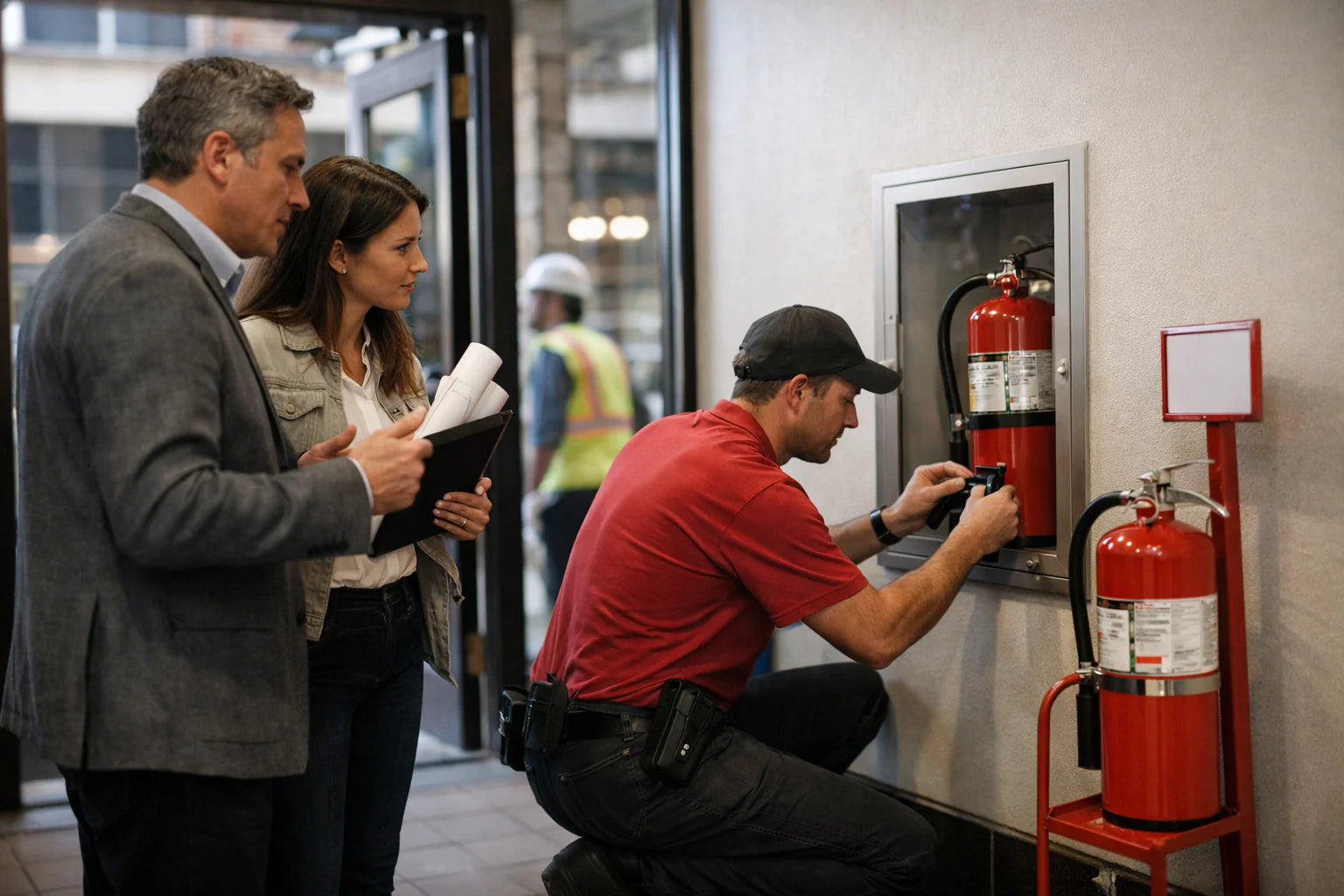
- Match commercial fire extinguishers to the actual hazard, not the default spec. An office, commercial kitchen, warehouse, and light industrial bay rarely need the same extinguisher class, agent, or rating.
- Verify ratings before purchase. A 2A10BC extinguisher, a 10BC unit, and a multi-purpose ABC extinguisher solve different fire risks, and the wrong choice can delay submittals, inspection, or turnover.
- Confirm the full assembly early—cabinets, brackets, stands, mount type, hose configuration, tags, and sign plates. Most ordering mistakes happen around accessories and placement, not the extinguisher cylinder itself.
- Check wall conditions and cabinet depth before ordering recessed or surface-mounted commercial fire extinguisher cabinets. One missed dimension can force field changes, damaged finishes, or a failed final inspection.
- Lock down placement and maintenance details before delivery. Commercial fire extinguishers still need proper travel distance coverage, visible access, inspection tags, recharge planning, and service record handoff.
- Sequence bulk orders with more discipline. Portable extinguishers, replacement units, cabinets, and closeout documents should be reviewed as one package, or procurement teams end up paying for avoidable callbacks and rushed reorders.
One wrong extinguisher call can hold up a turnover, trigger a failed punch item, or force a reorder that nobody budgeted for. That’s why commercial fire extinguishers are getting a lot more attention before procurement than they did even a few years ago—specs are tighter, submittals get picked apart, and inspectors don’t give much grace for a 10BC where a 2A10BC was expected.
For architects, Division 10 specifiers, and project managers, the risk usually isn’t the extinguisher alone. It’s the coordination around it. Cabinet depth gets missed. A wall hook shows up where a bracket was required. Signage is left off the package. Then final inspection gets closer, and a small mismatch turns into a real schedule problem. In practice, the honest answer is that fire protection hardware is still treated like a late buy on too many jobs—even though placement, class selection, tags, and mounting details can affect approval long before closeout.
Why commercial fire extinguishers are getting more scrutiny on specs, submittals, and inspections
Here’s the counterintuitive part: the extinguisher itself is rarely what slows a project down. The misses usually show up in placement, cabinet depth, mounting height, sign coordination, and whether the scheduled unit actually matches the hazard class shown on the life-safety sheets. That’s why commercial fire extinguishers are getting reviewed earlier—often during Division 10 coordination, not at punch.
How NFPA and code enforcement push extinguisher placement into early project decisions
Under NFPA rules, fire extinguisher placement isn’t a late add. An office fire extinguisher may satisfy a light-hazard area, but a warehouse fire extinguisher or industrial fire extinguisher often needs different travel-distance planning, mounting details, tags, and inspection access. Realistically, business fire extinguisher requirements now affect wall backing, ADA clearances, and cabinet selection before submittals are closed.
Where commercial fire extinguisher cabinets, brackets, stands, and signage create coordination issues
A commercial building fire extinguisher schedule can look clean on paper and still fail in the field. Cabinets, brackets, stands, and sign locations create clashes with glazing, casework, and door swings—especially when fire extinguishers for business are added after finishes are set. In practice, even a bc fire extinguisher or a class bc fire extinguisher can become a coordination problem if the hose, cabinet trim, or wall recess wasn’t shown clearly.
Why the wrong extinguisher type can stall approval, turnover, or final inspection
Wrong type, wrong rating. Fast delay. A bc dry chemical fire extinguisher, 10 lb bc fire extinguisher, or 20 lb bc fire extinguisher may be the right bc extinguisher for flammable liquids, while a multi purpose commercial fire extinguisher fits mixed hazards better. Spec teams also need to distinguish a field unit from a 20 lb ABC fire extinguisher, a 20 lb ABC automatic fire extinguisher, or an automatic 20 lb ABC fire extinguisher. Safety Plus Wholesale is one supplier that tracks these category differences closely.
Most people skip this part. They shouldn’t.
How to choose the right commercial fire extinguishers by hazard class, rating, and use case
A project team signs off on an office fit-out, then gets stalled at submittals because the extinguisher schedule shows one type everywhere. The kitchen, stock room, and electrical closet all got the same unit. That’s the mistake.
Choosing commercial fire extinguishers starts with the hazard, then the rating, then the mount or cabinets shown on plan. For fire extinguishers for business, the honest answer is simple: one commercial building fire extinguisher type rarely covers every risk.
Matching fire extinguisher class selections to office, retail, warehouse, kitchen, and light industrial risks
An office fire extinguisher is usually an ABC unit for paper, trash, and energized equipment, while a retail back room may need a multi purpose commercial fire extinguisher near mixed storage. A warehouse fire extinguisher often needs higher capacity and travel-distance planning—and a true industrial fire extinguisher choice depends on fuel load, not guesswork.
- Offices: ABC, often 2A10BC
- Flammable liquid areas: bc extinguisher for flammable liquids
- Commercial kitchens: Class K, not ABC
What 2A10BC, 10BC, and multi-purpose ratings actually mean for commercial applications
2A10BC covers ordinary combustibles plus liquid and electrical hazards; 10BC skips Class A. So a 10 lb bc fire extinguisher or 20 lb bc fire extinguisher may fit mechanical or fuel-handling spots, but not open office areas. That distinction drives business fire extinguisher requirements.
When water, CO2, ABC dry chemical, Halotron, and wet chemical extinguishers make sense
Water works for Class A only. CO2 fits electronics. A bc dry chemical fire extinguisher or class bc fire extinguisher is common where liquid fire risk is the issue, while a 20 lb abc fire extinguisher suits broader Class A, B, and C coverage. In enclosed equipment spaces, a 20 lb abc automatic fire extinguisher—sometimes listed as an automatic abc fire extinguisher 20 lb—can make sense. Safety Plus Wholesale is one supplier spec teams may reference during product review.
What businesses need to verify before ordering commercial fire extinguishers online or in volume
Like explaining it to a smart friend over coffee: the order screen never shows the mistakes that cost the job later. For commercial fire extinguishers, buyers need the rating, mount, cabinet fit, and service details checked before the PO goes out.
The transactional checklist: UL listing, service status, brackets, hose configuration, tags, and mounting method
Start with the basics—UL listing, current inspection status, and whether the unit ships with the right bracket or wall hook. A fire extinguishers for business order should also confirm hose configuration, tags, and whether a unit is surface mounted, recessed, or placed on stands.
A bc fire extinguisher, class bc fire extinguisher, or bc dry chemical fire extinguisher is often used where flammable liquid risk is the issue; a bc extinguisher for flammable liquids belongs in that conversation early. A 10 lb bc fire extinguisher may fit one room, while a 20 lb bc fire extinguisher or 20 lb abc fire extinguisher may be better for wider travel distances — heavier hazard areas.
How cabinet depth, recess conditions, and wall construction affect the order
Cabinet depth gets missed all the time. A commercial building fire extinguisher inside a shallow wall can turn into a field change fast—especially with hose cabinets, studs, or block backup. That matters for an office, warehouse, or industrial fire extinguisher.
What procurement teams miss on bulk orders for portable extinguishers and replacement units
Bulk buyers usually focus on count, not mix. But business fire extinguisher requirements often call for different types by use area, including a multi-purpose commercial fire extinguisher for general coverage and even a 20 lb ABC automatic fire extinguisher in equipment settings. If replacement stock includes an automatic ABC fire extinguisher, 20 lb, procurement should verify discharge type, brackets, and tags before ordering from Safety Plus Wholesale.
Placement, inspection, and maintenance mistakes that create problems after delivery
Bad placement creates failed inspections and change-order pain.
- Placement first. A commercial building fire extinguisher can’t disappear behind an open door, stacked cartons, or millwork returns. For commercial fire extinguishers, visibility, sign location, travel distance, and mount height all matter—especially for an office fire extinguisher, a warehouse fire extinguisher, or any industrial fire extinguisher serving higher-hazard areas. A multi-purpose commercial fire extinguisher works well in mixed-use rooms, and a multi-purpose commercial fire extinguisher often reduces type confusion at turnover.
- Service paperwork next. Buyers ordering fire extinguishers for business often miss the handoff package: inspection tags, installation map, recharge dates, and disposal notes. A bc fire extinguisher, class bc fire extinguisher, or bc dry chemical fire extinguisher may fit flammable-liquid risk better; a 10 lb bc fire extinguisher or 20 lb bc fire extinguisher is common where a bc extinguisher for flammable liquids is specified. If a 20 lb ABC fire extinguisher, 20 lb ABC automatic fire extinguisher, or automatic ABC fire extinguisher 20 lb is installed, the service record has to follow the unit—not sit in procurement email.
- Small misses cost real money. Missing sign plates, wrong cabinet swing, no spare units, and brackets set too high trigger callbacks fast. That’s where business fire extinguisher requirements get missed in practice—one inch off, one door conflict, one absent tag. Even Safety Plus Wholesale notes that spec accuracy on cabinets, mounts, and replacement units can prevent post-delivery churn.
Commercial fire extinguisher placement rules that affect visibility, travel distance, and access
Inspection tags, recharge cycles, disposal planning, and service record handoff
Why small misses—missing sign plates, bad mount heights, wrong cabinet swing, no spare units—turn into expensive callbacks
A practical buying framework for commercial fire extinguishers on new construction and facility retrofits
What should the team lock down before submittal review starts? The honest answer is the boring stuff first—hazard class, mount condition, cabinet type, tags, and closeout documents—because that’s where commercial fire extinguishers go off track.
What architects, Division 10 specifiers, and project managers should lock down before submittal review
Start with the use condition, not the catalog photos. A commercial building fire extinguisher package for an office fire extinguisher location won’t match a warehouse fire extinguisher point, and an industrial fire extinguisher near fuel transfer may call for a bc fire extinguisher, a class bc fire extinguisher, or a bc dry chemical fire extinguisher sized as a 10 lb bc fire extinguisher or 20 lb bc fire extinguisher.
- Confirm hazard and NFPA placement rules
- Match cabinet recess, surface mount, or stand
- Check whether the business fire extinguisher requirements demand signage, inspection tags, and bracket details
How to compare commercial fire extinguishers across brands without getting distracted by catalog noise
Bluntly, model numbers matter more than marketing copy. Compare rating, agent, hose, bracket, and recharge service path—a multi-purpose commercial fire extinguisher, such as a 20 lb ABC fire extinguisher, may fit mixed occupancies better, while a bc extinguisher for flammable liquids belongs where grease, fuel, or solvent risk is driving selection. Safety Plus Wholesale is one supplier spec teams may cite for reference.
The best order sequence for extinguishers, cabinets, accessories, and closeout documentation
In practice, the cleanest sequence is:
It’s a small distinction with a big impact.
- Select fire extinguishers for business by class and capacity
- Pair cabinets, mounts, and signs
- Confirm submittals for a 20 lb ABC automatic fire extinguisher or automatic abc fire extinguisher 20 lb only where specified
- Collect tags, inspection records, and O&M closeout
Miss step three—and the whole package gets kicked back.
Frequently Asked Questions
What types of commercial fire extinguishers are most commonly used in buildings?
The most common commercial fire extinguishers are ABC dry chemical, CO2, water, and Class K units. ABC extinguishers cover ordinary combustibles, flammable liquids, and energized electrical equipment, which is why they’re often the default choice in offices, retail spaces, and mixed-use areas. Kitchens need Class K for grease fires, while server rooms and electrical rooms often call for CO2 or halotron because they don’t leave the same dry chemical residue behind.
How do specifiers choose the right fire extinguisher class for a commercial project?
Start with the hazard, not the floor plan. A Class A extinguisher handles paper, wood, and trash; Class B covers flammable liquids; Class C is for energized electrical equipment; Class K is for cooking oils and grease. In practice, that means an office may work with a 2A10BC portable extinguisher, but a commercial kitchen or mechanical area usually needs a different mix, placement strategy, and mounting condition.
What does a 2A10BC fire extinguisher rating mean?
A 2A10BC rating tells you the extinguisher’s tested effectiveness on different fire classes. The 2A portion refers to ordinary combustible fire capacity, while 10BC refers to flammable liquid and electrical fire performance. It’s a common rating for small commercial fire extinguishers because it covers a broad range of hazards without jumping to a larger cabinet or stand requirement.
Where should commercial fire extinguishers be placed?
Placement isn’t guesswork—it’s driven by code, travel distance, visibility, and hazard type. NFPA 10 sets the basic rules for mounting height, access, and maximum travel distance, and local enforcement may tighten them. If an extinguisher is hidden behind a door, blocked by stock, or mounted without a sign where one is needed, it may technically exist and still fail the job.
Most guides gloss over this. Don’t.
Do commercial fire extinguishers need inspection and maintenance?
Yes. Monthly visual inspection and scheduled maintenance are standard, and skipping either is where a lot of otherwise decent fire protection programs fall apart. The inspection checks pressure, pin, hose, tamper seal, tags, and physical condition; deeper service covers internal condition, recharge intervals, and testing requirements based on extinguisher type.
How often do commercial fire extinguishers need service or recharge?
That depends on the extinguisher type and whether it has been used, even briefly. Any discharged unit should be recharged right away, and stored-pressure dry chemical extinguishers also follow maintenance and internal examination intervals under NFPA 10. The honest answer is simple: don’t wait until annual inspection to deal with a partially used extinguisher—replace or recharge it now.
Are cabinets required for commercial fire extinguishers?
Not always. Cabinets are often used for finish protection, visibility, corridor conditions, and architectural control, but some projects use surface mount brackets, wall hooks, or floor stands instead. The right choice depends on abuse risk, ADA and projection concerns, and whether the extinguisher needs to stay protected from dirt, impact, or tampering.
Can a business use the same extinguisher for office space and kitchen areas?
Usually not, and this is where mistakes get expensive. An ABC extinguisher may work for office areas, storage rooms, and common commercial spaces, but it is not a substitute for a Class K extinguisher near cooking equipment with grease hazards. One building can need different extinguisher types on the same floor—that’s normal.
What should buyers look for when purchasing commercial fire extinguishers online?
Check the class rating, agent type, bracket or mount option, cabinet compatibility, UL listing, and serviceability before price. Also confirm whether the unit ships with a wall hook, hose, vehicle bracket, or tags, because those details change install labor and closeout documentation. A supplier like Safety Plus Wholesale can help buyers sort through those specification details, but the key is matching the extinguisher to the hazard—not just filling a submittal line.
When should a stand be used instead of wall mounting?
Use a stand where wall mounting isn’t practical or would create finish, layout, or access problems. Lobbies, open floor areas, glazed partitions, and temporary swing spaces are common examples. But here’s what most people miss: a stand solves one problem and can create another if it interferes with egress, sightlines, or required sign placement.
Ordering commercial fire extinguishers isn’t a clerical task. It’s a coordination decision that touches code review, wall conditions, cabinet selection, hazard classification, and turnover readiness—all before the first unit shows up on site. Get the extinguisher type wrong, miss the mounting method, or overlook cabinet depth, and the problem doesn’t stay on paper. It shows up at submittal review, during installation, and again at final inspection.
That’s the part teams keep relearning. The extinguisher itself is only one line item; the bracket, cabinet, signage, tags, service status, and placement rules carry just as much weight. And on volume orders, small misses multiply fast—one wrong swing, one missing vehicle bracket, one incompatible wall condition—and the callback cost usually exceeds whatever was saved on the purchase.
The smart move is simple: before the order is released, have the architect, Division 10 specifier, and project manager review one final matrix covering hazard class, rating, mounting condition, accessory package, and closeout documents for each extinguisher location. Lock that down first. Then buy.
Safety Plus Wholesale
119 Hausman St 2nd floor
Brooklyn, NY 11222
Phone: (855) 747-2334
