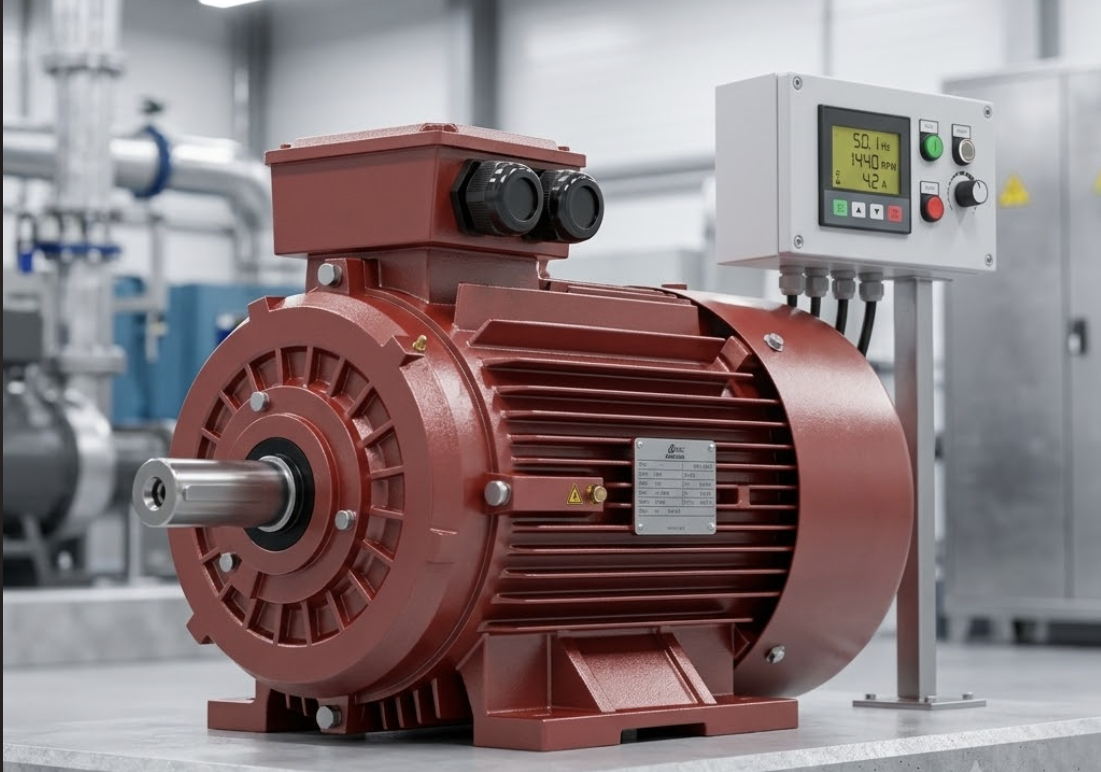

WEIFANG, SHANDONG, CHINA, August 20, 2026 /EINPresswire.com/ — Industrial modernizations frequently demand adjustable speed control to cut operational electricity costs. Modern automated factories install variable speed drives to modulate motor velocities accurately based on changing process loads. However, the widespread adoption of high-frequency pulse width modulation inverters introduces hidden electrical anomalies that compromise heavy machinery integrity. Specifically, high-speed switching cycles generate parasitic currents that accumulate along the motor shaft assembly. When these voltages seek a path to ground, they cross internal bearing components, causing severe subsurface damage. To address this technical challenge permanently, global procurement managers rely on an experienced High Quality VSD/VFD Motor Factory to supply robustly engineered machinery. Choosing the right mitigation strategy prevents premature mechanical breakdowns and ensures continuous manufacturing operations. This informative press release analyzes the electromechanical mechanisms of shaft voltage corrosion and outlines verified industrial remediation solutions.
The Physics of Bearing Fluting: High-Frequency Common-Mode Voltage and Parasitic Capacitance
Modern adjustable speed drives utilize fast-switching insulated-gate bipolar transistors to synthesize alternating current voltage waves. While this high frequency improves velocity regulation, it generates a significant non-zero common-mode voltage at the motor terminals. The rapid rise time of these electrical pulses, commonly measured as change in voltage over change in time, creates uncompensated voltage imbalances. Consequently, this high-frequency electrical stress creates capacitive coupling paths throughout the interior architecture of the machine.
The parasitic capacitance network establishes electrical connections across non-contacting components. Specifically, electrical charges gather between the stator winding and the rotor lamination core. Because high-frequency currents view small gaps as low-impedance pathways, voltage accumulates continuously on the rotating assembly. The shaft voltage seeks the shortest path toward the grounded stator frame to complete its circuit. Unfortunately, the mechanical bearings represent the primary physical bridge connecting the rotating shaft to the stationary outer housing.
During standard high-speed operations, a thin layer of specialized grease isolates the rolling elements from the inner and outer bearing races. This lubricating fluid film acts as a temporary dielectric barrier under low-voltage conditions. However, as the capacitive shaft voltage rises, it eventually exceeds the dielectric breakdown threshold of the oil barrier. When this breakdown happens, the accumulated electrical energy discharges violently through the rolling elements via electrical discharge machining. This localized arcing creates microscopic craters and distinct mechanical fluting patterns across the steel surfaces. Plant operators notice increased audible noise and elevated operating temperatures as the physical damage worsens over time.
Mitigating the Loop: Engineering Analysis of Insulation Barriers and Discharge Paths
Industrial maintenance engineers evaluate several complementary technical configurations to interrupt these destructive high-frequency current loops permanently. One conventional approach relies on the installation of insulated bearings featuring a specialized aluminum oxide plasma coating on the outer ring. This thin ceramic layer provides substantial electrical resistance, which effectively blocks circulating low-frequency current paths. Nevertheless, high-frequency capacitive currents can sometimes bypass this barrier because thin insulation layers act like capacitors under high excitation frequencies.
Alternatively, installation crews deploy shaft grounding solutions to divert dangerous electrical charges safely away from the internal bearing assembly. Microfiber grounding brushes ride continuously against the rotating shaft surface, maintaining a low-impedance connection directly to the external motor frame. This parallel path channels the accumulated capacitive charges straight to earth ground before they can cross the lubrication film. However, these mechanical brushes require regular field inspections and clean operating environments to prevent dust accumulation from impeding electrical contact.
For extreme variable speed environments, facility managers upgrade standard assemblies to hybrid ceramic bearings featuring silicon nitride rolling elements. Silicon nitride possesses excellent galvanic isolation properties, making electrical discharge machining impossible through the bearing interior. This premium configuration completely eliminates the electrical current loop while providing exceptional wear resistance and lower friction coefficients. Although ceramic elements carry a higher initial procurement price, they deliver an impressive return on investment by extending mechanical lifetimes significantly.
The YVF and YVF2 Architecture: Integrated Electromagnetic Shielding and Structural Grounding at SUNVIM
To eliminate electrical pitting corrosion at the source of product design, sophisticated manufacturing processes and optimized electromagnetic slot structures are essential. Our high-performance series of variable-frequency dedicated motors adopts targeted structural optimization to suppress harmful common-mode voltages before they impact critical mechanical components. Production lines across various industrial sectors can rely on these specialized motors for stable operation under harsh variable-frequency working conditions. Engineers have redesigned the internal stator structure to reduce the inherent parasitic capacitance between copper windings and the rotor core.
Furthermore, tight mechanical tolerances are maintained throughout frame machining. Shandong SUNVIM Motor Co., Ltd. employs high-precision automated machining centers. Rigorous machining accuracy minimizes air gap deviation and stabilizes internal magnetic flux, ensuring structural balance for high-power industrial motors under dynamically varying loads.
To support demanding global projects, the company offers integrated mitigation systems directly from the assembly line. Buyers can choose factory-installed insulated end-shields, specialized grounding devices, or customized hybrid bearing configurations depending on specific field requirements. This versatile design philosophy allows engineering contractors to secure pre-configured powertrains that match distinct variable frequency drive profiles perfectly.
Field Diagnostic Protocol: A Step-by-Step Troubleshooting Matrix for Plant Reliability Engineers
Plant reliability engineers must implement systematic diagnostic protocols to identify early-stage bearing corrosion before catastrophic equipment failure occurs. A comprehensive inspection begins by measuring peak-to-peak shaft voltage using high-bandwidth digital oscilloscopes and carbon-tipped test brushes. Technicians capture the characteristic voltage discharge waveforms while the drive system operates under active load conditions. If peak measurements exceed safe electrical thresholds, maintenance crews must immediately inspect the grounding infrastructure and check internal insulation resistance.
Simultaneously, reliability teams utilize acoustic monitoring and high-frequency vibration spectrum analysis to trace physical surface degradation. Electrical fluting generates specific defect frequencies that appear clearly within high-frequency vibration charts long before visible damage occurs. Catching these mechanical anomalies early allows supervisors to schedule routine maintenance during planned facility shutdowns, avoiding expensive emergency stoppages. This proactive field diagnostic approach preserves production schedules and extends asset utilization rates across heavy manufacturing installations.
In conclusion, managing shaft current corrosion requires an optimal blend of predictive diagnostics and rugged motor construction. Collaborating with an experienced industrial exporter allows manufacturing operations to eliminate systemic drive vulnerabilities and lower total operating expenses. The advanced YVF and YVF2 variable speed drive solutions provide global industries with a verifiable path to maximum runtime and energy efficiency. Ultimately, implementing these robust technical solutions protects critical mechanical investments, stabilizes manufacturing output, and secures predictable factory operations worldwide.
Corporate Website: https://www.sunvimmotor.com/.
SHANDONG SUNVIM MOTOR CO., LTD.
SHANDONG SUNVIM MOTOR CO., LTD.
+ +86 536-5827128
email us here
Visit us on social media:
LinkedIn
Facebook
YouTube
X
Legal Disclaimer:
EIN Presswire provides this news content “as is” without warranty of any kind. We do not accept any responsibility or liability
for the accuracy, content, images, videos, licenses, completeness, legality, or reliability of the information contained in this
article. If you have any complaints or copyright issues related to this article, kindly contact the author above.

Media gallery