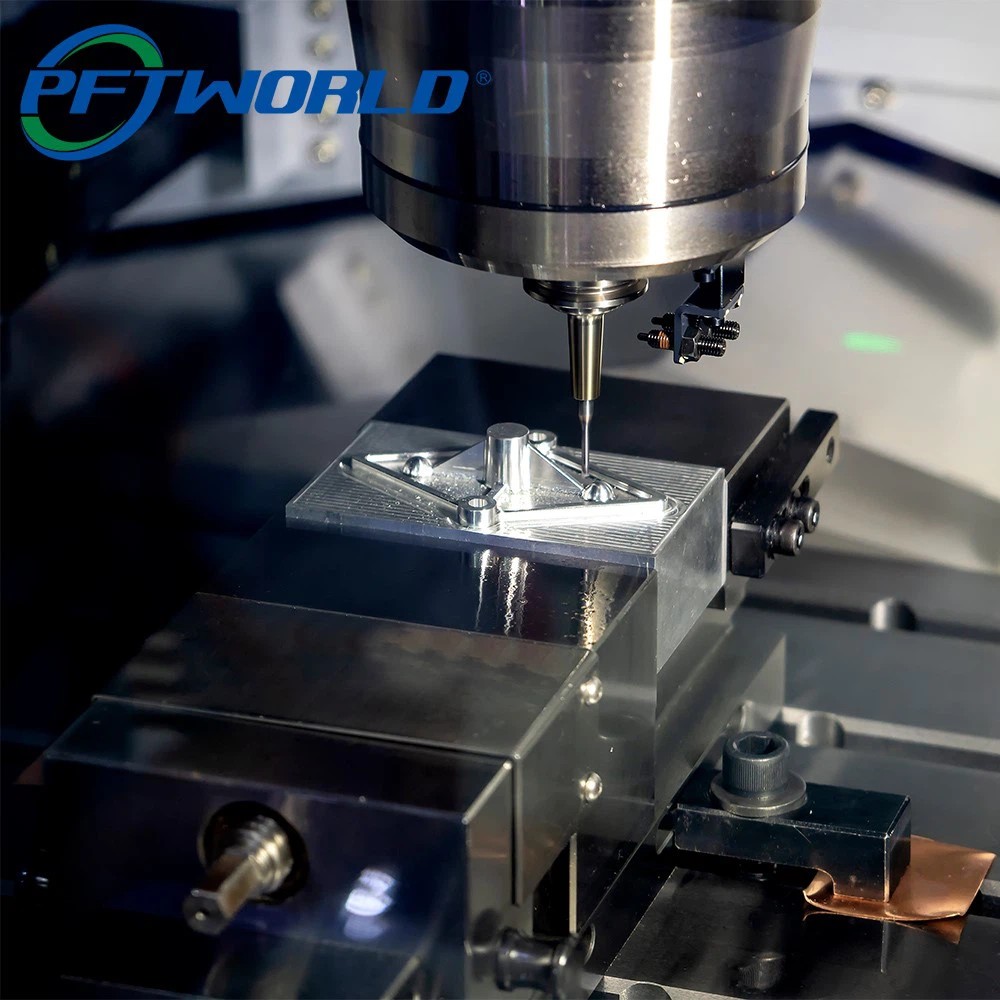

SHENZHEN, GUANGDONG, CHINA, August 26, 2026 /EINPresswire.com/ — PFTWORLD supports prototype product development as a Top Prototype Manufacturing Supplier by moving design drawings through review, material selection, programming, milling, drilling where the drawing requires holes, and dimensional inspection. Prototype machining is used for feasibility and iteration, meaning the finished part is not the endpoint: measured geometry and evaluation feedback inform the next drawing revision and a more production-oriented manufacturing step.
Prototype Manufacturing Starts with Drawings, Models and a Defined Evaluation Goal
PFTWORLD begins a useful prototype route with the customer’s design data so machining decisions can be tied to the feature, fit, or feasibility question the prototype is intended to answer. Custom CNC manufacturing can begin from drawings, 3D models, or specifications, positioning prototype machining as a direct support tool for design feasibility and iteration. Rather than treating prototyping as a standalone service disconnected from production realities, the initial data sets the foundation for a scalable manufacturing strategy.
Before programming begins, the buyer should identify the core material, critical tolerances, necessary surface condition, and the exact quantity required for testing. This early definition ensures the prototype is not over- or under-specified for the intended review. When a design concept moves into iterative physical manufacturing, clear drawing and model inputs drive CNC process planning and reduce ambiguity on the shop floor. A prototype becomes manufacturable when the design file and the decision it must support are explicitly defined before programming and cutting.
Material Choice and DFM Set the Conditions for the CAM Program
PFTWORLD connects the design drawing to machining more reliably when material behavior, tool access, and critical geometry are reviewed before the CAM strategy is released. The custom CNC workflow includes design review and material selection before programming and machining, giving Design for Manufacturability (DFM) a defined place upstream of toolpath execution. By addressing these variables early, manufacturing teams can mitigate risks associated with complex geometries or challenging materials.
Material choice fundamentally affects cutter selection, workholding strategies, and achievable feature behavior during the machining cycle. Because machining parameters are not generalized across all materials, the prototype program reflects the specific behaviors of the selected grade rather than relying on a generic, one-size-fits-all machining recipe. This tailored approach prevents excessive tool wear and ensures the final part meets its dimensional targets. DFM and material selection form the essential engineering bridge between the customer drawing and the precise toolpath that will produce the prototype.
Milling Builds the Main Prismatic and Contoured Prototype Geometry
PFTWORLD’s CNC milling capability creates the primary faces, pockets, slots, and contoured features that define many machined prototypes from the approved design model. Custom CNC capability includes milling and multi-axis machining, allowing the process route to match the prototype’s specific access requirements rather than restricting the part to one fixed machine orientation. This adaptability is particularly critical when translating complex digital models into physical components.
Where several angled or distributed faces are involved, multi-axis access can significantly reduce setup changes, minimizing cumulative positioning errors; simpler open geometry can remain on a highly efficient conventional milling route. Because prototype geometry can be routed according to its access complexity, PFTWORLD evaluates each feature to determine the most stable and accurate machining approach. Milling supplies the core prototype geometry, with machine-axis choice determined by feature access rather than by a rigid process constraint.
Drilling Is Added Where the Design Actually Requires Hole Features
PFTWORLD integrates drilling into the prototype route for mounting, fastening, locating, or fluid-access holes without implying that every prototype includes a drilling operation. Drilling is supported within PFTWORLD’s CNC machining scope, so holes can be programmed seamlessly with the milling sequence when the engineering drawing explicitly calls for them. This integration ensures that all features are machined in a coordinated, efficient manner.
Hole diameter, depth, position, thread requirement, and access direction should remain explicitly defined on the drawing because milling and drilling are selected from the geometry rather than treated as a mandatory pair for every design. Hole requirements are strictly drawing-dependent and not universal to every prototype, meaning process planning must adapt to the specific functional needs of each component. Drilling belongs in the prototype process only when the design requires it, and the hole definition should be just as explicit as the milled geometry around it.
Inspection Gives the Prototype a Verified Geometry for the Next Iteration
PFTWORLD closes the machining cycle with inspection so design teams can evaluate a physical prototype whose critical dimensions have been checked against the intended drawing. Inspection follows machining in the documented custom CNC workflow, and company equipment includes Coordinate Measuring Machines (CMM) and 2-D measuring instruments for comprehensive dimensional verification. This documentation provides objective data to confirm that the prototype accurately represents the digital design.
Measured prototype geometry can be directly compared with fit or functional feedback, helping the next design revision distinguish a drawing problem from a manufacturing deviation. Inspection data supports iterative prototype review by providing a reliable, documented baseline for engineering discussions. Inspection turns the finished prototype from a mere physical object into a traceable engineering reference for the next design or manufacturing decision.
An Updated Drawing Carries Prototype Learning Toward the Next Manufacturing Stage
PFTWORLD connects design files, DFM, material selection, programming, milling or drilling, inspection, and iteration into a complete, closed-loop prototype-manufacturing path. The manufacturing sequence moves logically from design files through review, material selection, programming, milling or drilling, inspection, and iteration, keeping each development decision tied to a defined process stage. This structured workflow ensures that lessons learned during prototyping are captured and applied to future production runs.
Engineering teams can confidently submit the revised drawing, material, tolerance, finish, and quantity requirements so the next prototype or production-oriented step is quoted accurately from the updated design state. Dedicated prototype capability is deeply integrated with broader CNC manufacturing to support continuous, data-driven iteration across the product development lifecycle. The design-to-machining workflow gives development teams a clear, reliable path from a conceptual drawing to a measured prototype and subsequent revision; prototype consultation and comprehensive precision manufacturing support are available at https://www.pftworld.com/.
Shenzhen Perfect Precision Products Co., Ltd.
PFTWORLD
email us here
Visit us on social media:
Instagram
Facebook
YouTube
X
Legal Disclaimer:
EIN Presswire provides this news content “as is” without warranty of any kind. We do not accept any responsibility or liability
for the accuracy, content, images, videos, licenses, completeness, legality, or reliability of the information contained in this
article. If you have any complaints or copyright issues related to this article, kindly contact the author above.

Media gallery