
SHANTOU, CHINA, September 9, 2026 /EINPresswire.com/ — Flow Characteristics of Viscous Sauces and Equipment Selection Criteria
Tomato paste, chili sauce, salad dressing, and similar products behave as non-Newtonian fluids. Their viscosity does not remain constant but shifts depending on shear rate—a property that complicates filling accuracy if equipment is not matched to the material. Ketchup, for instance, thins under pressure and flows readily through a nozzle, yet holds its shape once deposited. A thick peanut butter sauce may barely move without significant force applied. These differences mean that selecting a filling machine starts with understanding yield stress, solid content percentage, and how the product responds to mechanical agitation.
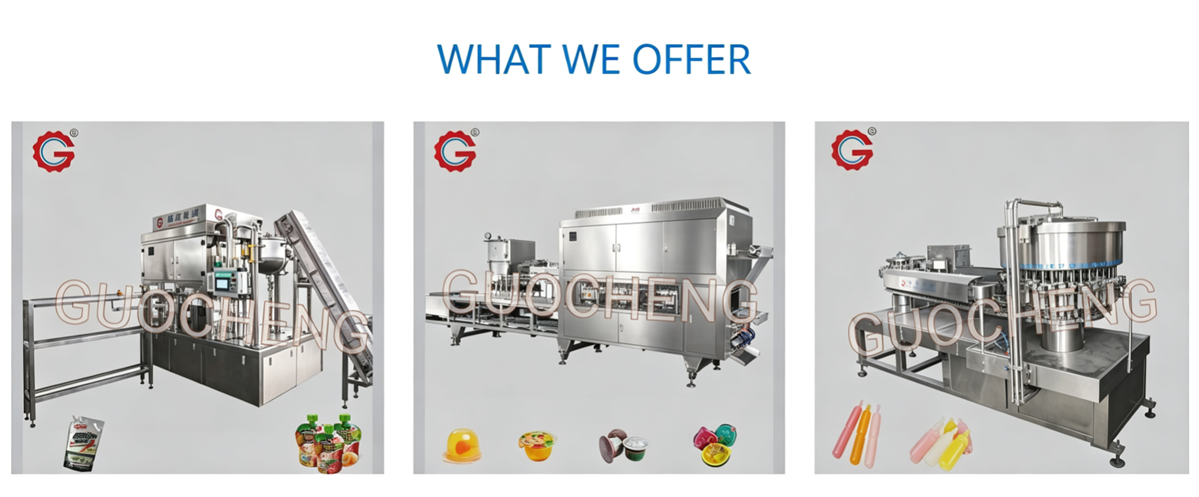
As an industrial sauce filling machine manufacturer in China, GCPACK (Shantou Guocheng Machinery CO.,Ltd.,) addresses this variability by offering filling lines configured for specific rheological profiles. The company’s product range covers both cup-filling and spout-pouch packaging formats, each engineered to handle sauces from low-viscosity soy-based liquids to high-solid-content chunky salsas. Product pages on the GCPACK website list applicable viscosity ranges and recommended configurations, giving processors a starting reference before detailed consultation begins.
The practical implication for sauce manufacturers is straightforward: a machine optimized for water-like liquids will struggle with mayonnaise, and a system built for thick pastes may over-pressurize a thin vinaigrette. Matching equipment to material behavior at the outset prevents dosing inconsistencies, excessive wear on seals, and unnecessary downtime.
Particulate Sauce Handling: Valve Geometry and Pump Clearance
Many commercial sauces contain visible inclusions—diced onion, minced garlic, chili seeds, or meat granules. These particulates introduce a second layer of complexity beyond viscosity alone. If pump rotor clearances are too tight, particles get crushed or jammed. If check-valve orifices are undersized, blockages occur mid-cycle and halt production.
GCPACK’s cup-filling machines and pouch-filling systems specify piston cylinder bore diameters and one-way valve dimensions on their respective product detail pages. This transparency allows food engineers to cross-reference particle size distribution data from their own QC labs against the machine’s published pass-through dimensions. A sauce containing 8mm diced vegetables, for example, requires valve openings and transfer tubing with internal diameters comfortably exceeding that measurement to avoid bridging.
The rotary valve and piston pump designs used in GCPACK’s industrial sauce filling machine lines accommodate solids up to specified diameters without requiring operators to pre-filter or excessively homogenize the product. Preserving chunk integrity matters commercially—consumers expect to see real vegetable pieces in a premium salsa, not a uniform puree that suggests over-processing.
Anti-Drip Mechanisms and Hopper Anti-Sedimentation Design
Viscous sauces tend to string or drip at the nozzle tip after each fill cycle completes. This residual tailing creates mess on container rims, interferes with seal integrity, and increases reject rates. Vacuum suck-back nozzles address this by applying a brief negative pressure at cycle end, pulling the trailing thread back into the nozzle body and delivering a clean cut-off.
Equally important is what happens inside the hopper. High-solid sauces with suspended particulates settle over time. Heavier components—meat bits, dense vegetable chunks—migrate downward while oils or thinner liquid phases rise. The result is inconsistent fill composition from the first container to the last in a batch.
Shantou Guocheng Machinery CO.,Ltd. tackles sedimentation through SUS304 stainless steel double-wall hoppers that accept insulation jackets and integrated paddle stirrers. The insulation maintains sauce temperature within a controlled band, keeping viscosity stable, while gentle continuous agitation prevents stratification without breaking down delicate particulates. Technical specifications for the GF-L series on the company website detail hopper capacities, stirrer configurations, and jacket connection points relevant to heated sauce applications such as warm curry or molten cheese-based products.
Changeover Cleaning and Hygienic Design Considerations
Sauce manufacturing facilities producing multiple SKUs—say, a mild barbecue sauce on Monday and a spicy sriracha on Tuesday—face a recurring tension between thorough sanitation and minimized downtime. Every product changeover demands cleaning that eliminates allergen cross-contact and microbial residue without requiring hours of manual disassembly.
CIP (Clean-in-Place) connection ports built into the filling circuit allow automated rinse cycles using caustic and acid solutions without removing major components. GCPACK integrates CIP-ready interfaces across its sauce filling machine manufacturer product lines, reducing the manual labor involved in sanitation between runs.
Additional hygienic design elements include independently floating sealing stations that conform to container lip variations without manual adjustment, and tool-free removable heating heads that simplify inspection and cleaning of product-contact surfaces. These features collectively support HACCP and GMP compliance frameworks that sauce processors must satisfy for retail and export market access. GCPACK holds ISO 9001 certification and CE marking, providing documented quality system assurance that complements the mechanical hygiene features built into each machine.
For multi-product facilities, the ability to strip down, sanitize, and reassemble filling heads within a short window directly affects daily output capacity. Machines designed with fewer crevices, polished internal surfaces, and modular component architecture reduce biofilm formation risk and cut validated cleaning cycle times.
Matching Machine Architecture to Sauce Properties
Viscosity and solid content remain the two primary variables that determine which filling mechanism—piston, rotary lobe, or peristaltic—best suits a given sauce product. Piston fillers deliver high accuracy for thick pastes; rotary systems handle moderate viscosities with gentle particle treatment; peristaltic pumps suit applications where zero product-to-metal contact is required.
GCPACK’s product portfolio spans cup sealing machines, premade pouch filling systems, and spout pouch packaging lines, each configurable with different pump and valve modules depending on the sauce category. The industrial sauce filling machine configurations available cover fill volumes from small single-serve sachets through large family-size pouches and cups, accommodating production scales from regional condiment brands to high-volume contract packers.
Processors evaluating equipment options can review detailed parameter tables, dimensional drawings, and applicable sauce categories on the GCPACK product pages. For applications requiring custom valve sizing, non-standard hopper volumes, or integration with upstream cooking kettles and downstream case packers, direct technical consultation with the engineering team at Shantou Guocheng Machinery CO.,Ltd. provides project-specific guidance.
Specifications, machine photography, and applicable food category references are available at: https://www.guochengmachine.com/
Shantou Guocheng Machinery CO.,Ltd.
Shantou Guocheng Machinery CO.,Ltd.
+ +8618933671215
email us here
Legal Disclaimer:
EIN Presswire provides this news content “as is” without warranty of any kind. We do not accept any responsibility or liability
for the accuracy, content, images, videos, licenses, completeness, legality, or reliability of the information contained in this
article. If you have any complaints or copyright issues related to this article, kindly contact the author above.

Media gallery