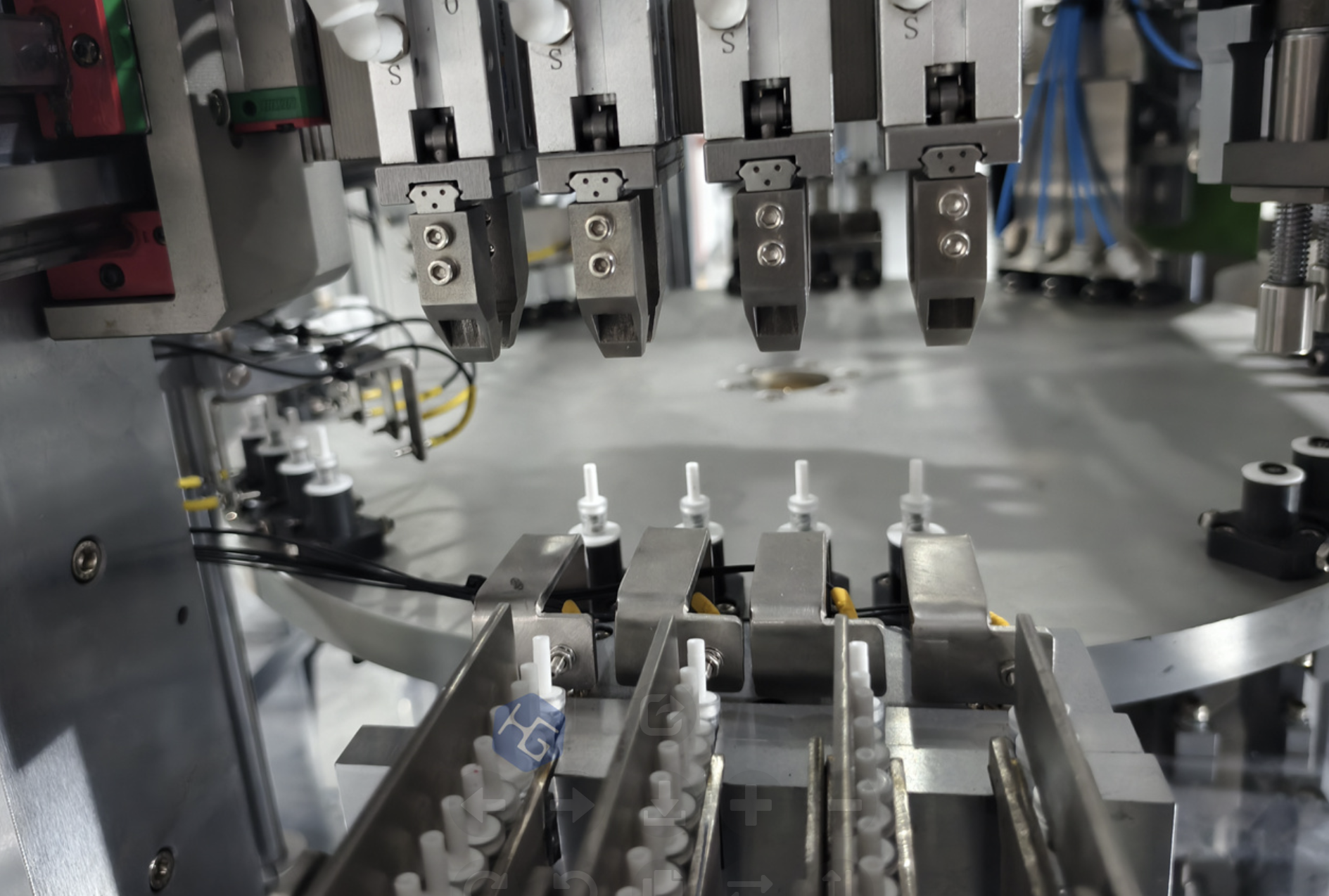

YUYAO, ZHEJIANG, CHINA, October 20, 2026 /EINPresswire.com/ — The global shift toward smart manufacturing has placed a significant premium on the reliability of automated production lines. Industrial procurement officers now face the complex task of identifying partners who can deliver precision while navigating the intricacies of international logistics. In this context, selecting an High Quality Automatic Assembly Machine Exporter requires evaluating five specific dimensions: geometric customization capability, regulatory certification scope, factory testing transparency, international deployment track record, and total cost of ownership across the equipment lifecycle. HG Automation has emerged as a key participant in this sector by focusing on these essential benchmarks. By aligning its manufacturing processes with international expectations, the company demonstrates how Asian exporters can provide high-value solutions to a diverse global clientele.
Engineering Versatility: The Ability to Decipher Complex Component Geometry
A primary criterion for evaluating an equipment exporter involves their capacity to handle non-standard mechanical challenges. Traditional “off-the-shelf” assembly solutions often fail when manufacturers introduce intricate plastic components, such as those found in automotive sensors or medical drug delivery devices. These parts frequently feature irregular shapes, micro-sized dimensions, and varying material densities. A competent exporter must possess the R&D depth to design custom feeding and orientation systems that prevent jams or component damage during high-speed cycles.
HG Automation addresses these geometric complexities by integrating modular design principles into its assembly units. For example, the assembly of spray pump valves requires the synchronization of multiple small parts, including springs, gaskets, and dip tubes. Engineering teams must develop specialized grippers and vision inspection systems to ensure each element sits perfectly within the housing. This level of component-specific engineering ensures that the machine remains productive even as product designs evolve. Consequently, manufacturers gain a system that adapts to their specific needs rather than forcing their products to fit the limitations of a rigid machine.
Regulatory Maturity: Navigating Global Compliance Landscapes with CE Standards
Operational risk mitigation often begins with regulatory compliance. For many international buyers, particularly those in highly regulated markets, the presence of recognized safety certifications is a non-negotiable requirement. CE marking serves as a critical indicator that a machine meets European health, safety, and environmental protection standards. Choosing an exporter with a mature understanding of these regulations reduces the likelihood of customs delays or workplace safety violations upon installation.
The commitment to international standards is evident in the hardware and software architecture of HG Automation’s equipment. Machines feature standardized electrical layouts, protective shielding, and fail-safe logic to protect operators. Furthermore, compliance extends to the materials used in construction, ensuring they meet environmental directives like RoHS. This focus on regulatory maturity allows global stakeholders to integrate new assembly lines into their existing infrastructure with minimal friction. By adhering to these rigorous benchmarks, an exporter proves its reliability as a long-term strategic partner capable of supporting large-scale industrial projects.
Operational Transparency: Bridging the Distance with Rigorous Testing Protocols
Transparency in the manufacturing process is essential for building trust in cross-border partnerships. Distance often creates a “black box” effect where the buyer is uncertain about the progress or quality of their equipment. High-quality exporters overcome this by implementing robust documentation and testing phases. Factory Acceptance Testing (FAT) is a vital part of this process, allowing clients to verify that the machine performs according to agreed-upon specifications before it leaves the factory floor.
Modern communication tools and digital simulations now allow for even greater transparency. HG Automation invites stakeholders to engage with the production process through detailed factory tours and virtual inspections. These sessions highlight the precision of the CNC machining centers and the rigor of the quality control departments. By observing the assembly and testing of their specific machines, buyers can gain confidence in the mechanical integrity of the system. This open-door policy ensures that any technical adjustments occur early in the project lifecycle, significantly reducing the time required for Site Acceptance Testing (SAT) and final commissioning.
Project Provenance: Scalability Lessons from High-Precision Global Deployments
A proven track record in diverse international markets is a strong indicator of an exporter’s scalability. Successfully deploying a fully automated production line in an emerging or highly regulated market requires more than just mechanical skill; it requires logistical expertise. In late 2025, Huagong Automation completed and shipped a fully customized thread pump assembly system to a client in Russia, comprising four specialized machines: a Piston 3-Part Assembly Machine at 100 to 160 pieces per minute, a Pump Body 7-Part Assembly Machine handling seven components at 60 to 90 pieces per minute, a Head Cap Assembly Machine with integrated online inspection at 60 to 90 pieces per minute, and a Tube Insertion Machine at 90 to 120 pieces per minute. Each unit passed factory acceptance testing before disassembly, with components individually packaged in customized reinforced wooden crates. This project demonstrates cross-border scalability in a market with complex logistics requirements — a benchmark applicable across emerging and regulated-market deployments.
Such breakthroughs demonstrate that the core technology can scale across different industries. Whether the task involves assembling intricate medical devices or robust automotive plastic parts, the underlying logic of high-speed verification remains constant. HG Automation utilizes these past successes to refine its project management strategies for future clients. By analyzing performance data from various global installations, the engineering team can predict potential wear patterns and optimize the machine’s durability. This history of successful deployments provides a blueprint for how specialized automation can be successfully exported and maintained across borders.
Sustainable TCO: Evaluating After-Sales Resiliency
The total cost of ownership for assembly equipment typically breaks into four categories: purchase price (one-time), maintenance labor (annual), unplanned downtime losses (variable), and spare parts logistics (ongoing). Industry benchmarks suggest that maintenance and downtime costs over a 5-year period frequently exceed the original equipment purchase price for buyers who underestimate these categories at procurement stage. An exporter’s after-sales structure — response time commitments, spare parts delivery speed, warranty scope, and operator training quality — directly determines which cost categories stay manageable and which accumulate unchecked.This ensures that any technical issues are resolved quickly, maintaining the high uptime required for profitable manufacturing.
HG Automation supports the entire lifecycle of its machinery by providing detailed technical training for the client’s operators. This knowledge transfer is crucial for maintaining the machine’s performance over several years. Additionally, the use of globally recognized brands for sensors, motors, and PLC components ensures that spare parts are accessible in the buyer’s local market. This strategy minimizes the risk of prolonged shutdowns caused by logistics delays. By focusing on the long-term ROI of the client, the exporter moves beyond a simple transaction to become a guardian of the client’s production efficiency.
Conclusion: Selecting a Partner for the Future of Smart Manufacturing
As industrial competition intensifies, the choice of an automation partner becomes a defining factor in a company’s success. High-quality exporters in Asia offer a unique combination of engineering innovation and cost-effective manufacturing. The five criteria above — geometric customization, CE and ISO certification scope, FAT documentation, international deployment history, and structured after-sales commitments — convert supplier evaluation from a subjective comparison into a verifiable checklist. For procurement teams managing multi-machine line upgrades, applying each criterion in sequence significantly reduces the probability of post-delivery surprises.
For more information regarding automated assembly solutions and global export services, please visit the official website: https://www.hgautomachine.com/.
Ningbo Huagong Automation Technology Co., Ltd.
Ningbo Huagong Automation Technology Co., Ltd.
Legal Disclaimer:
EIN Presswire provides this news content “as is” without warranty of any kind. We do not accept any responsibility or liability
for the accuracy, content, images, videos, licenses, completeness, legality, or reliability of the information contained in this
article. If you have any complaints or copyright issues related to this article, kindly contact the author above.

Media gallery