
HONG KONG, October 21, 2026 /EINPresswire.com/ —
As demand for personalized jewelry and flexible diamond sourcing continues to grow, manufacturers are adapting to changing preferences across the global fine jewelry market. Hongkong Jingcan Crystal Craft Limited participates in this evolving industry with product offerings that include fine jewelry, Lab Grown Diamonds, and Rough Diamond. By serving customers interested in both diamond materials and finished jewelry, the company operates in a market where product quality, customization, and transparent sourcing information are important considerations.
Fine jewelry manufacturing combines material selection, design, craftsmanship, and quality control. From engagement rings and wedding bands to necklaces, bracelets, and earrings, every finished piece requires careful coordination between gemstones and metal settings. Meanwhile, advances in diamond-growing technology have introduced additional sourcing options for jewelry brands, wholesalers, retailers, and designers. These developments are encouraging businesses to explore new product strategies while maintaining high expectations for appearance and reliability.
The Growing Market for Fine Jewelry
Fine jewelry remains an important category in the global accessories market. Consumers purchase jewelry for engagements, weddings, anniversaries, personal collections, and gifts. Although classic designs continue to attract buyers, demand for distinctive shapes, personalized details, and customized settings has encouraged manufacturers to offer more flexible production services.
Creating a finished jewelry piece involves several stages, including design development, gemstone selection, metal fabrication, stone setting, polishing, and final inspection. Each stage affects the quality and appearance of the final product. A well-designed ring, for example, must balance the proportions of the center stone with the setting, band thickness, comfort, and durability. Earrings and necklaces require similar attention to weight, balance, and construction.
For jewelry businesses, sourcing decisions involve more than comparing prices. Buyers must consider gemstone specifications, metal quality, workmanship, production schedules, packaging, and delivery arrangements. Clear product information and reliable communication help reduce uncertainty throughout the purchasing process.
Hongkong Jingcan Crystal Craft Limited presents itself as a supplier of diamond-related products and fine jewelry. Its online portfolio includes products for customers seeking finished jewelry as well as buyers interested in loose diamond materials. This combination is relevant to businesses with different sourcing needs, from retailers preparing jewelry collections to manufacturers purchasing stones for further processing.
Lab Grown Diamonds and Modern Jewelry Design
Lab Grown Diamonds have become an increasingly visible option in the jewelry industry. They are produced using controlled technological processes rather than being formed naturally underground. Two established production methods are high-pressure high-temperature (HPHT) and chemical vapor deposition (CVD).
Laboratory-grown diamonds have essentially the same chemical composition and crystal structure as natural diamonds. However, their origins differ, and this distinction should be disclosed accurately when products are marketed or sold. Their appearance and quality vary according to individual characteristics, making it important for buyers to review each stone’s specifications rather than relying solely on its product category.
Diamond evaluation commonly considers the four Cs: carat weight, color, clarity, and cut. These characteristics influence a stone’s appearance and market value. Shape is another important factor in jewelry design. Round brilliant diamonds offer a familiar look, while oval, pear, emerald, cushion, and other shapes provide different visual effects.
For jewelry manufacturers, lab-grown diamonds can provide another sourcing option when developing engagement rings, earrings, pendants, and other diamond-set products. Buyers can select stones according to their designs, target prices, and customer preferences. The final choice should also consider setting compatibility, stone measurements, and the intended style of the finished jewelry.
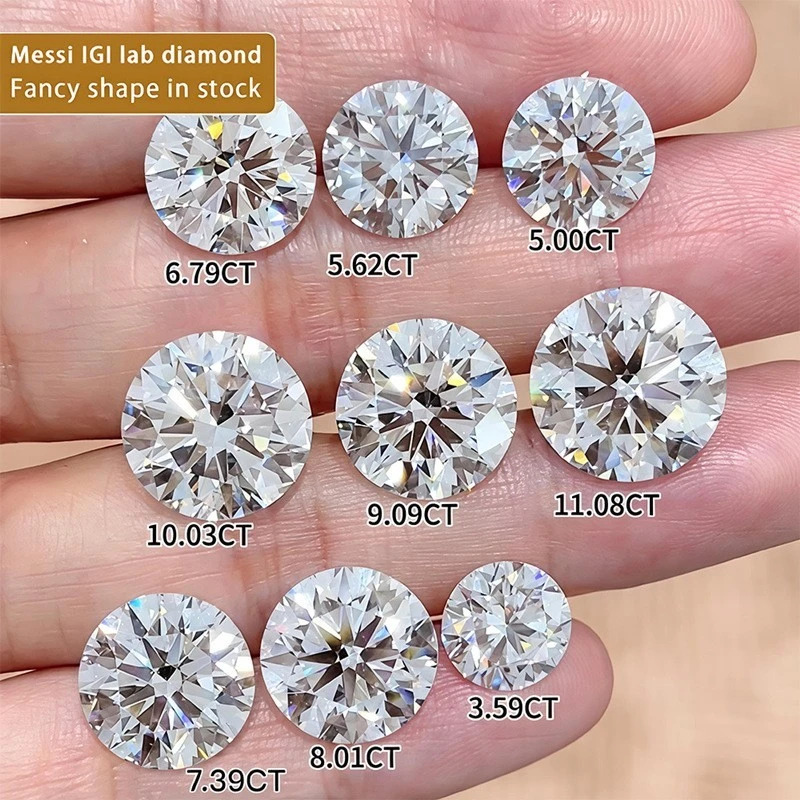
Hongkong Jingcan Crystal Craft Limited lists Lab Grown Diamonds among its product offerings and describes customization options involving diamond size, color, and clarity. Such options may help jewelry businesses source stones for specific designs or create collections with consistent specifications.
Before placing an order, buyers should confirm the characteristics of the individual stones, including weight, measurements, color, clarity, and available grading documentation. Where an independent grading report is provided, its details should correspond to the exact diamond being purchased. Clear documentation helps buyers compare products and communicate accurate information to their own customers.
Rough Diamond for Further Processing
Rough Diamond occupies a different position in the diamond supply chain from polished stones and completed jewelry. Rough diamonds have not undergone the full cutting and polishing process that gives many finished jewelry diamonds their familiar faceted appearance.
For diamond cutters and manufacturers, rough-stone assessment involves evaluating the crystal’s shape, dimensions, inclusions, and potential yield after processing. The objective is to determine how the material could be transformed into polished stones while balancing quality, production costs, and market demand. The outcome depends on the characteristics of each individual stone.
Laboratory-grown rough diamonds may also be supplied for further processing. Buyers need to understand the production method, material specifications, and intended use before purchasing. Rough material should not be evaluated in the same way as a polished diamond ready for jewelry setting, because additional processing is required and the final yield may vary.
Hongkong Jingcan Crystal Craft Limited features Rough Diamond as a product category on its website, including descriptions of laboratory-grown rough diamonds produced through CVD or HPHT methods. This category may interest professional buyers seeking raw diamond materials for cutting, polishing, and subsequent jewelry manufacturing.
Purchasers should confirm the quantity, weight, dimensions, material characteristics, and pricing basis of the rough stones under consideration. For larger lots, it is also useful to clarify how the material is described, what inspection options are available, and whether any supporting documentation accompanies the shipment.
International compliance requirements should be considered as well. Natural rough diamonds may be subject to applicable international trade documentation, including requirements associated with the Kimberley Process. Laboratory-grown rough diamonds are a distinct category and should be accurately identified in commercial documents. Buyers and sellers should verify the rules relevant to the product and destination before completing a transaction.
Offering both Lab Grown Diamonds and Rough Diamond gives Hongkong Jingcan Crystal Craft Limited a presence in different parts of the diamond supply chain. These categories serve different purposes: polished stones can be selected for jewelry production, while rough diamonds are intended for buyers prepared to undertake further processing.
Customization and Product Development
Customization has become a useful service for jewelry brands and retailers seeking to differentiate their collections. Buyers may request particular diamond sizes, shapes, settings, metal choices, logos, or packaging. These requirements need to be translated into clear specifications before production begins.
A typical development process starts with a design concept, reference images, sketches, or technical requirements. The supplier and buyer then review the proposed construction, material availability, target budget, and production feasibility. Visual drafts or samples can help identify issues before the order moves into full production.
Hongkong Jingcan Crystal Craft Limited describes customized jewelry and diamond specifications among its services. Its website also refers to visual design support and branded packaging options. Such services may be relevant to businesses developing private-label jewelry or preparing products for particular retail markets.
Buyers should confirm minimum order quantities, sample costs, revision policies, production lead times, and final acceptance criteria. They should also establish how gemstone specifications will be checked and how finished products will be inspected before shipment. Clear agreements help reduce the risk of differences between approved samples and delivered goods.
Packaging deserves attention because jewelry is often purchased as a gift or sold through branded retail channels. Appropriate packaging can protect products during transport while supporting presentation and brand identity. Confirming packaging dimensions, labeling, and logo requirements early can help avoid delays near the end of production.
Quality Assurance and Transparency
Quality control is essential in fine jewelry because appearance, durability, and product authenticity influence customer confidence. For diamond products, buyers should verify whether stones are natural or laboratory-grown and review the available specifications and documentation.
For finished jewelry, inspections may cover stone security, setting alignment, metal finish, dimensions, and overall workmanship. The setting must be appropriate for the stone and design. Poorly secured stones or uneven finishing can affect both appearance and durability.
Buyers should also assess claims relating to sustainability and ethical sourcing carefully. Laboratory-grown diamonds and natural diamonds have different supply chains, but environmental impacts vary according to production methods, energy sources, and other factors. General claims should therefore be supported by relevant evidence.
International jewelry transactions may involve customs declarations, taxes, shipping requirements, and destination-specific regulations. Accurate product descriptions and clear commercial documents help buyers and sellers manage these obligations. Before ordering, customers should request the documentation and delivery terms relevant to their transaction.
Hongkong Jingcan Crystal Craft Limited describes services involving product customization, cross-border delivery, and after-sales support. Prospective customers should confirm the exact scope of these services, the availability of grading documents, and any warranty or return conditions directly with the company.
The Future of Fine Jewelry Manufacturing
The fine jewelry sector continues to evolve as consumers seek more choice and businesses look for flexible sourcing options. Laboratory-grown diamonds have expanded the range of available diamond products, while customization gives jewelry brands greater freedom to develop distinctive designs.
Digital design tools can improve communication between buyers and manufacturers by allowing concepts to be reviewed before production. However, visual previews may not fully represent the weight, finish, or wearing comfort of a finished piece. Physical samples and quality checks can remain valuable, particularly for new designs or larger orders.
Supply-chain coordination is also important. Jewelry businesses may source polished stones for immediate production, rough diamonds for processing, or completed jewelry for resale. Understanding these different purchasing requirements helps buyers select the appropriate product category and compare suppliers more effectively.
For Hongkong Jingcan Crystal Craft Limited, its online presentation of fine jewelry, Lab Grown Diamonds, and Rough Diamond reflects several distinct needs within the diamond and jewelry market. Buyers can evaluate the company’s offerings according to their designs, technical requirements, target markets, and sourcing plans.
Ultimately, successful jewelry manufacturing depends on appropriate materials, thoughtful design, careful workmanship, and transparent product information. Buyers who establish clear specifications and verify details before ordering are better positioned to develop reliable supplier relationships.
About Hongkong Jingcan Crystal Craft Limited
Hongkong Jingcan Crystal Craft Limited is a Hong Kong-based company with an online product portfolio covering fine jewelry, laboratory-grown diamonds, and rough diamonds. Its official website describes services related to diamond cultivation technology, jewelry manufacturing, customization, cross-border delivery, and after-sales support.
Its product offerings include Lab Grown Diamonds and Rough Diamond, as well as jewelry such as diamond rings, engagement rings, wedding bands, necklaces, bracelets, and earrings. The company also describes customization options involving diamond specifications, jewelry styles, visual design support, and branded packaging.
Customers interested in sourcing products from Hongkong Jingcan Crystal Craft Limited should confirm current availability, individual diamond specifications, grading documentation, customization requirements, production schedules, shipping arrangements, and applicable warranty terms directly with the company.
Website: [www.hkjcdiamond.com]
Address: 19-25 Shan Mei Street, Fo Tan, New Territories, HongKong
Official Website: https://www.hkjcdiamond.com/
Selina Yuan
Hongkong Jingcan Crystal Craft Limited
hkjccrystal.cheungkong@gmail.com
Legal Disclaimer:
EIN Presswire provides this news content “as is” without warranty of any kind. We do not accept any responsibility or liability
for the accuracy, content, images, videos, licenses, completeness, legality, or reliability of the information contained in this
article. If you have any complaints or copyright issues related to this article, kindly contact the author above.

Media gallery