

Xi’an City, Shaanxi Province,China – October 21,2026
Top Powder Moringa Suppliers for Global Buyers should be judged beyond price, packaging, and attractive claims. Moringa Oleifera Powder can vary widely in color, taste, moisture, and nutrient consistency. Agricultural origin matters. So does processing.Grand View Research and Mordor Intelligence identify expanding demand for moringa-based food, beverage, and wellness products. However, their market estimates differ. That gap deserves attention. Industry data remains fragmented across regions, product forms, and reporting methods. The Centre for the Promotion of Imports, an agency of the Dutch Ministry of Foreign Affairs, also highlights traceability and European buyer requirements for botanical ingredients. These reports support market potential, but they do not validate every supplier.Scientific credibility matters more than market excitement. Johns Hopkins researcher Dr. Jed W. Fahey wrote, “Moringa oleifera is a highly valued and versatile plant.” His peer-reviewed review also emphasizes the need for stronger clinical evidence. That caution should guide global purchasing decisions.Reliable suppliers should provide batch-specific Certificates of Analysis, botanical identification, microbiological testing, heavy-metal screening, pesticide results, and moisture data. Buyers should confirm whether the powder comes from leaves, seeds, or mixed plant materials. Those differences affect safety, flavor, and commercial use. Organic certification may help, but it cannot replace laboratory verification.Look for documented farms, controlled drying, sealed inner liners, and lot-level traceability. Ask about storage temperature and shelf life. Small details reveal operational maturity.Not every supplier will answer clearly. That is a warning sign. Even experienced buyers can overlook seasonal variation or inaccurate labeling. A careful comparison of Powder Moringa suppliers protects product quality, customer trust, and long-term market credibility.
What Is Powdered Moringa and Why Global Buyers Source It
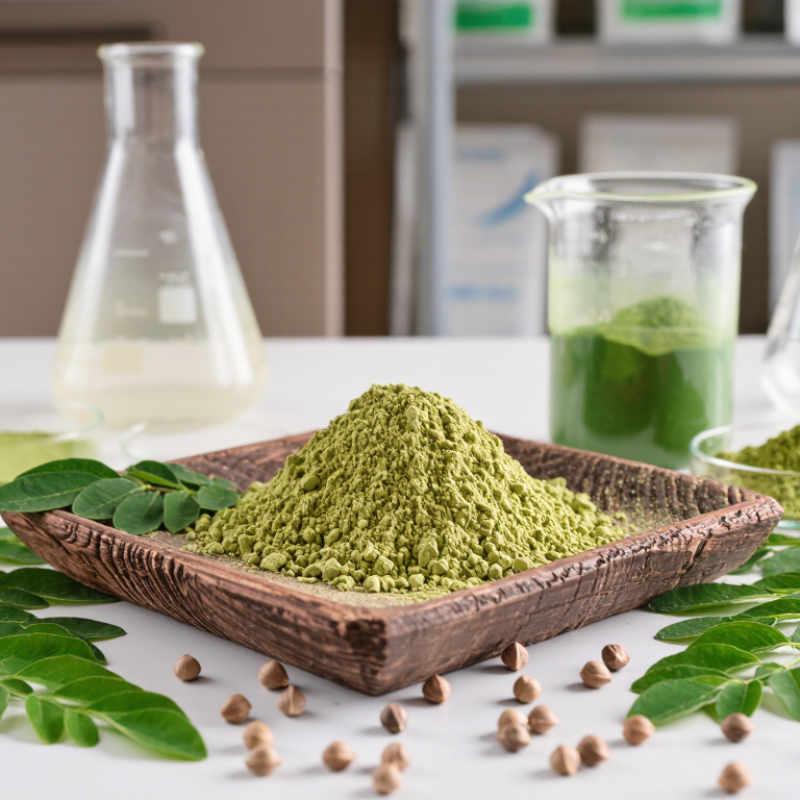
Moringa Tree Powder is made from cleaned, dried, and milled leaves of Moringa oleifera. It is different from moringa seed powder, oil, or root products. Processing quality matters. Low-temperature drying can help protect color, aroma, and sensitive nutrients, while excessive heat may create a dull, brown powder. Serious suppliers should provide moisture, microbial, pesticide-residue, and heavy-metal test results for each production lot.
Global buyers source powdered moringa because it is lightweight, shelf-stable, and easy to blend into teas, nutrition mixes, capsules, and functional foods. The Grand View Research dietary supplements report valued that wider market at about USD 177.5 billion in 2023. It also forecasts roughly 9.1% annual growth from 2024 to 2030. This does not prove moringa demand alone. It shows the commercial environment.
The category is not perfectly transparent. UN Comtrade data does not provide a dedicated global HS code for moringa powder, so trade figures can be difficult to isolate. A 2023 review in Foods reported that moringa leaves contain protein, minerals, and polyphenolic compounds, but composition changes with soil, harvest age, and drying methods. Buyers should request botanical identification and origin records. Color alone is not proof of quality. Sometimes, it misleads. Audits, retained samples, and clear specifications offer stronger evidence than attractive marketing claims.
Key Quality Standards for Moringa Powder Suppliers
Reliable moringa powder suppliers treat quality as a measurable process, not a polished certificate. Raw leaves should be botanically authenticated, harvested from documented farms, and dried quickly under controlled conditions. Moisture and water activity matter because damp powder can develop mold during storage. A supplier should provide batch-specific results for Salmonella, E. coli, yeast, mold, pesticides, heavy metals, and aflatoxins.Codex Alimentarius’ General Principles of Food Hygiene recommends HACCP-based controls from production through distribution. Testing should follow validated methods, preferably through an ISO/IEC 17025-accredited laboratory. WHO and FAO estimate that contaminated food causes about 600 million illnesses and 420,000 deaths annually worldwide, showing why microbial verification cannot be treated as paperwork. Check the laboratory date.Traceability should connect one finished batch to its farm, drying record, milling date, packaging material, and shipment. Packaging must protect the powder from light, oxygen, moisture, and handling damage. The label should state botanical name, country of origin, net weight, lot code, shelf life, and storage conditions. Destination-market rules still apply, especially for pesticide residues and contaminants. A certificate of analysis is useful, but it is not proof of every bag. Independent verification remains sensible. Some suppliers may test only once per season, which creates a blind spot. Experienced buyers should request sampling plans, retain samples, corrective-action records, and recent transport data before approving a long-term supplier.
Top Powder Moringa Suppliers for Global Buyers – Key Quality Standards for Moringa Powder Suppliers
The following criteria are commonly used by international buyers when evaluating moringa leaf powder suppliers. Numerical limits are typical commercial specifications and should be confirmed against the importing country’s regulations, contract requirements, and intended use.
| Quality Dimension | Recommended Buyer Specification | Verification Method or Required Documentation | Why It Matters |
|---|---|---|---|
| Botanical identity | Moringa oleifera leaves only; no undeclared stems, roots, seeds, or other plant material. | Botanical identification, supplier specification, authenticated reference material, and identity testing where required. | Confirms authenticity and prevents substitution or adulteration. |
| Raw-material origin | Documented growing region, harvest season, farm or collection-area traceability, and agricultural practices. | Lot-specific traceability records, grower declarations, harvest logs, and supplier audit documents. | Supports recall readiness, risk assessment, and consistent quality between lots. |
| Appearance and color | Fine, free-flowing green powder with a characteristic leafy odor; no visible mold, insects, foreign matter, or excessive browning. | Incoming inspection, approved product standard, color reference, and retained sample comparison. | Provides an immediate indication of freshness, processing conditions, and contamination. |
| Particle size | Defined sieve specification, commonly around 60–100 mesh depending on the application. | Sieve analysis or laser particle-size report for each agreed product grade. | Controls mouthfeel, dispersibility, blending performance, and filling-line behavior. |
| Moisture content | Common commercial target: not more than 7–8% by weight, unless a different validated specification is agreed. | Validated moisture analyzer or oven-drying method; results should be linked to the lot number. | Lower moisture reduces caking and helps limit microbial and enzymatic deterioration. |
| Water activity | Preferably below 0.60 for a stable dry powder, subject to the supplier’s validated process and packaging system. | Calibrated water-activity meter with documented sampling and test conditions. | Water activity is a useful indicator of the ability of microorganisms to grow. |
| Total aerobic plate count | Typical buyer limit: ≤100,000 CFU/g; stricter limits may apply to supplements or ready-to-consume products. | Accredited laboratory microbiology report using a recognized method such as ISO 4833 or an equivalent validated method. | Indicates overall microbiological hygiene and processing control. |
| Yeast and mold | Typical buyer limit: ≤1,000 CFU/g, subject to the product category and destination-market requirements. | Lot-specific laboratory test using a recognized method such as ISO 21527 or an equivalent validated method. | Helps detect storage problems and fungal contamination. |
| Salmonella | Absent in 25 g. | Pathogen testing by an accredited laboratory using a recognized validated method, with the sample size clearly stated. | Salmonella is a significant food-safety hazard and is generally unacceptable in powdered botanical ingredients. |
| Escherichia coli | Typically absent or below the importing-market limit, commonly tested in 1 g or 25 g depending on the specification. | Lot-specific microbiological certificate showing the method, sample size, and result. | Provides evidence of hygienic handling and possible fecal contamination control. |
| Pathogenic bacteria | Testing may include Staphylococcus aureus, Bacillus cereus, and other organisms according to intended use and risk assessment. | Hazard-based testing plan, accredited laboratory reports, and documented corrective-action procedures. | Powdered botanicals can carry environmental microorganisms if drying and handling are inadequate. |
| Heavy metals | Lead, cadmium, arsenic, and mercury should comply with the legal limits of the destination market and the agreed product specification. | Inductively coupled plasma mass spectrometry or equivalent accredited laboratory testing; results reported in mg/kg. | Plants can absorb metals from soil, irrigation water, equipment, or environmental sources. |
| Pesticide residues | Compliant with the maximum residue limits applicable in the destination market; a multi-residue screen is commonly requested. | Accredited multi-residue analysis, agricultural input records, and supplier pesticide-control program. | Residue requirements differ by market, so compliance must be checked before shipment. |
| Mycotoxins | Test for relevant mycotoxins when required by risk assessment or destination-market rules; results must meet applicable legal limits. | Accredited laboratory report and documented controls for drying, humidity, and storage. | Improper drying or humid storage can increase fungal and mycotoxin risk. |
| Foreign matter | No visible stones, glass, metal, insects, plastic, soil, or other extraneous material. | Visual inspection, sieving, magnets or metal detection, and documented cleaning controls. | Protects consumers and reduces processing and regulatory risk. |
| Adulteration screening | No undeclared fillers, dyes, artificial colorants, or non-moringa botanical material. | Identity testing such as microscopy, chromatography, DNA-based testing, or other fit-for-purpose methods. | Supports product authenticity and protects the buyer’s formulation claims. |
| Drying and processing | Controlled drying that minimizes excess heat, moisture reabsorption, contamination, and unnecessary nutrient degradation. | Validated process records, temperature and time logs, sanitation procedures, and equipment-maintenance records. | Processing conditions influence color, flavor, microbial safety, and nutrient retention. |
| Food-safety management | Documented HACCP-based controls; certification to a recognized food-safety scheme is preferred for large international buyers. | Current certificate, scope of certification, audit status, and corrective-action records. | Demonstrates systematic hazard control rather than reliance on final-product testing alone. |
| Organic status | Only claim organic status when the product and supply chain are certified under the rules of the target market. | Valid organic certificate, transaction certificate where applicable, and segregation records. | Organic labeling is regulated and cannot be supported solely by a supplier declaration. |
| Allergen and cross-contact control | Written declaration covering allergens handled at the facility and controls preventing cross-contact. | Allergen-control plan, cleaning validation, facility statement, and product declaration. | Helps buyers meet labeling duties and manage sensitive consumer populations. |
| Packaging | Food-contact-compliant, sealed, moisture-resistant packaging with tamper evidence where appropriate. | Packaging specification, food-contact declaration, seal-integrity checks, and packaging-material certificates. | Protects the powder from moisture, oxygen, light, pests, and handling contamination. |
| Label and lot coding | Product name, botanical name, net weight, country of origin, lot number, production date, best-before date, and storage conditions. | Approved label artwork, lot-traceability procedure, and shipment documentation. | Supports regulatory compliance, inventory control, and rapid product recall. |
| Shelf life and storage | Commonly 18–24 months when unopened and stored in a cool, dry, dark place; actual shelf life must be supported by stability data. | Stability study or historical data, packaging validation, and defined temperature and humidity conditions. | Confirms that color, odor, microbiological quality, and chemical parameters remain acceptable. |
| Certificate of Analysis | Each commercial lot should have a CoA covering identity, moisture, microbiology, and agreed contaminants. | CoA must include lot number, test date, methods, units, specification limits, results, and authorized approval. | Allows buyers to verify shipment conformity before release or production use. |
| Sampling and retention | Representative sampling plan with retained samples from each production lot. | Written sampling procedure, chain-of-custody records, sample retention period, and sample storage conditions. | Improves the reliability of test results and supports investigation of complaints. |
| Supply capacity and consistency | Defined minimum order quantity, lead time, annual capacity, shipment terms, and acceptable lot-to-lot variation. | Capacity statement, production schedule, previous shipment records, and approved pre-shipment sample. | Reduces supply interruptions and supports consistent formulation and quality. |
Major Moringa-Producing Regions and Supply Advantages
India remains a major origin for Moringa Leaf Powder, supported by established cultivation, processing skills, and export infrastructure. CBI’s European market analysis identifies India as an experienced supplier with broader commercial availability. Many farms use small plots, creating flexible volumes but uneven documentation. That gap matters.East Africa offers strong supply advantages. Tanzania, Kenya, Uganda, and Ethiopia provide suitable climates, expanding cultivation, and growing interest in dried botanical ingredients. The 2024 IMARC Group market report describes Asia-Pacific as a leading regional market, while African production is gaining attention. However, global production statistics remain difficult to compare. FAO does not publish a fully standardized moringa-only dataset. Reported figures may mix fresh leaves, dried leaves, and powder.Latin America also deserves consideration. Countries such as Peru and Nicaragua can offer seasonal diversification and shorter routes into American markets. Buyers should inspect moisture results, microbial testing, pesticide records, and batch traceability. A bright green color alone proves little. Ask for harvest dates and milling conditions. Supplier claims can sound precise, yet farm-level evidence is sometimes thin. That is the uncomfortable part. Regional advantage does not automatically mean consistent quality. Independent laboratory checks remain essential, especially when purchasing container-scale volumes.
Top Moringa-Producing Regions and Supply Advantages
India has the most established commercial moringa cultivation and processing base, while East Africa offers expanding organic and smallholder supply networks. Southeast Asia benefits from tropical growing conditions and established herbal-product processing. Annual precipitation figures are representative long-term averages for major cultivation zones and are provided for regional comparison, not as production-volume estimates.
Reference basis: FAO crop and agroecological information, national agricultural profiles, and representative climate-normal data from major cultivation areas.
How to Evaluate Moringa Powder Manufacturers and ExportersTop Powder Moringa Suppliers for Global BuyersHow to Evaluate Moringa Powder Manufacturers and Exporters
Choosing a moringa supplier requires more than comparing prices. A professional manufacturer should identify the plant species, growing region, harvest period, and processing method. Ask for batch-specific certificates of analysis, not generic laboratory files. These documents should cover microbial counts, moisture, pesticides, heavy metals, and foreign matter.
Traceability matters. A reliable exporter can explain how leaves move from farms to drying rooms and sealed bags. Visit the facility if possible, or request dated production photographs and an independent audit report. Look for clean stainless-steel equipment, protected storage, and moisture-controlled packaging. Powder Moringa should retain a fresh green color, mild leafy aroma, and consistent texture. Unusual bitterness may signal poor handling, though taste alone proves little.
Request a small sample before placing a large order. Test it through an accredited laboratory near your market. Check the packaging material, lot number, shelf life, customs documents, and transport conditions. Export experience also includes answering difficult questions clearly. A polished website proves little. I have seen suppliers provide attractive samples but weak follow-up records. That deserves caution. Even careful screening can miss seasonal variation, because weather and drying speed affect color and nutrients. Keep written specifications, approve every batch, and avoid changing requirements after production begins.
Certifications, Testing, Packaging, and Shipping RequirementsTop Powder Moringa Suppliers for Global Buyers
Reliable suppliers of Moringa Leaf Powder for Health Food should show more than a glossy certificate. Ask for current ISO 22000 or HACCP-based food-safety records, supplier audits, and traceable farm-to-lot documentation. The Codex Alimentarius General Principles of Food Hygiene, revised in 2022, places hazard analysis and preventive controls at the center of food production. A certificate helps. It does not replace verification.
Testing should match the destination market and the product risk profile. Independent laboratories should examine Salmonella, E. coli, yeast, mold, aflatoxins, pesticide residues, heavy metals, moisture, and botanical identity. Require a batch-specific certificate of analysis, not a recycled template. The WHO Global Report on Traditional and Complementary Medicine 2019 notes that 170 of 194 Member States reported using traditional medicine. That scale increases the need for consistent quality controls. One clean test cannot prove every shipment is safe.
Packaging needs a moisture barrier, food-contact compliance, tamper evidence, and a readable lot code. Suppliers should state net weight, production date, best-before date, storage temperature, and country of origin. For shipping, request sealed cartons, pallet details, commercial invoices, packing lists, and destination-specific customs documents. Some markets may require phytosanitary paperwork. Check before loading. A practical weakness remains: small suppliers may offer excellent powder but incomplete records. Buyers should treat that gap as a corrective-action issue, not an automatic rejection. Supplier performance should be reviewed after arrival, including seal condition, odor, color, and laboratory results.
Comparing Suppliers by Price, Capacity, Reliability, and Support
For global buyers, powder moringa pricing should begin with landed cost, not the quoted factory price. UN Comtrade data under HS 121190 groups moringa with other botanical products, so trade statistics cannot provide a clean moringa benchmark. This limitation matters. Compare three written quotations using identical mesh size, moisture limits, packaging, delivery terms, and testing requirements. A low price can hide higher freight, inspection, or rejection costs.Capacity requires evidence beyond impressive production claims. Ask for monthly output, harvest periods, drying equipment, warehouse conditions, and recent shipment records. Request batch-specific certificates of analysis covering moisture, microbiology, heavy metals, pesticides, and identity testing. Codex General Principles of Food Hygiene, revised in 2022, supports documented hygiene controls and traceability throughout processing. Bigger is not always safer. Small processors may offer fresher lots, but their supply can fluctuate during poor harvests.Reliability is measurable. Track quotation response time, sample consistency, on-time delivery, complaint handling, and willingness to share corrective-action reports. The World Bank’s 2023 Logistics Performance Index evaluates customs, infrastructure, shipment arrangements, logistics services, tracking, and timeliness; these factors directly affect delivery risk. Support should include clear export documents, regulatory cooperation, packaging advice, and a named technical contact. I would score each supplier over several shipments, not one successful sample. That takes longer. It is also more honest.
Conclusion
Powder Moringa is a nutrient-rich ingredient made from carefully dried and milled moringa leaves, valued by global buyers for its versatility in food, beverage, wellness, and supplement applications. Successful sourcing begins with understanding quality standards, including clean raw materials, consistent color and flavor, low moisture, fine particle size, and reliable microbiological and contaminant controls. Major producing regions may offer advantages such as suitable climates, established farming communities, skilled processing, and efficient access to export markets.When evaluating moringa powder suppliers, buyers should review manufacturing capacity, traceability, quality management systems, certifications, laboratory testing, and experience with international orders. Packaging should protect the powder from moisture, light, oxygen, and contamination, while shipping arrangements must support product stability and timely customs clearance. A practical supplier comparison should consider more than price: production consistency, order capacity, lead times, communication, documentation, technical support, and after-sales service are equally important. By assessing these factors together, global buyers can select dependable partners and build a stable, transparent supply chain.
About us
Summit Ingredients Co., Ltd. was established in 2015 and is Located in Weinan City, Shaanxi Province, at the northern foot of the Qinling Mountains in China. With its superior geographical location and abundant natural plant raw materials, it focuses on the research, development, production and sales of Botanical extracts, fruit and vegetable powders and solid beverages etc. We also provides professional OEM/ODM services and has established the firm and reliable professional image in the industry.
Media Contact
Company Name: Summit Ingredients Co., Ltd.
Contact Person: Media Relations
Email: Send Email
Country: China
Website: https://www.summitingredients.com/
Press Release Distributed by ABNewswire.com
To view the original version on ABNewswire visit: Moringa Powder Suppliers Expand Sourcing Options for Global Buyers
