
The Business Research Company’s Internet Of Things (IoT) In Energy Global Market Report 2026 – Market Size, Trends, And Forecast 2026-2035
LONDON, GREATER LONDON, UNITED KINGDOM, October 27, 2026 /EINPresswire.com/ — The integration of the Internet of Things (IoT) within the energy sector is rapidly reshaping how utilities and industries manage power generation, distribution, and consumption. As technologies evolve and digital transformation accelerates, the IoT in energy market stands out as a crucial space for innovation and investment. Here’s a detailed exploration of market size, regional leadership, technological drivers, and key players shaping this dynamic field.
Market Size and Regional Growth Highlights in the Internet of Things in Energy Market
The IoT in energy market is poised for substantial expansion, with projections indicating it will exceed $46 billion by 2030. This segment represents about 7% of the broader IoT Services market, which itself is expected to reach $646 billion by the same year. Within the larger Information Technology industry, forecasted at $13,788 billion by 2030, the energy-focused IoT market will hold nearly 0.3% of the total value. The anticipated compound annual growth rate (CAGR) for this sector is 10%, signaling steady and strong development over the coming years.
Request A Free Sample Of The Internet Of Things (IoT) In Energy Market Report
https://thebusinessresearchcompany.com/sample_request?id=47542788&type=smp&name=Internet%20Of%20Things%20%28IoT%29%20In%20Energy%20Market%20Report%202026&utm_source=EINPresswire&utm_medium=Paid&utm_campaign=Oct_PR
North America Leading the Internet of Things in Energy Market Growth
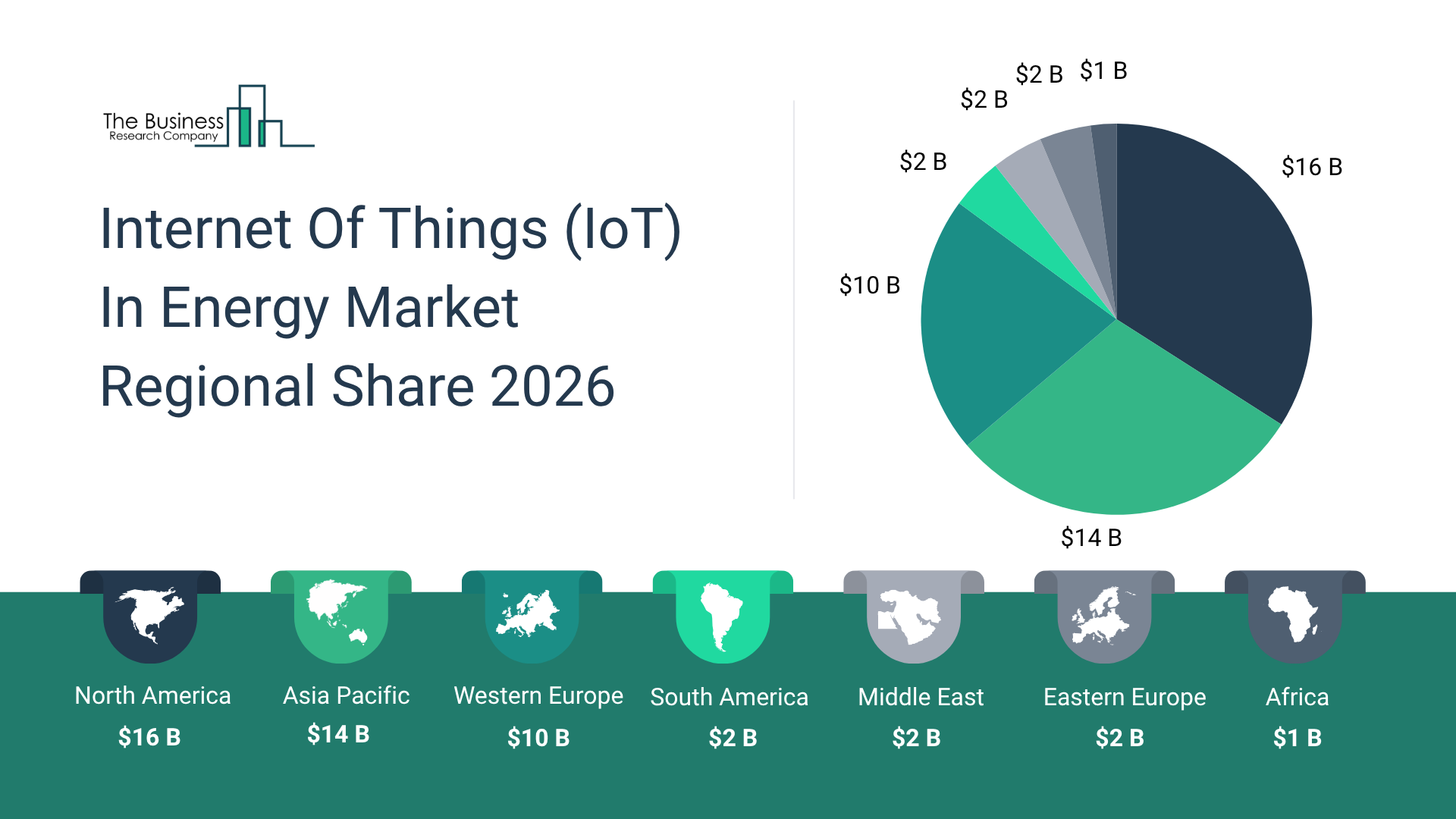
North America is set to remain the dominant region for IoT in energy applications by 2030, growing from $10 billion in 2025 to $16 billion, maintaining a 10% CAGR. This growth is largely driven by utilities aggressively expanding smart grid infrastructure and adopting connected energy management solutions. Investments in renewable energy monitoring, grid modernization initiatives, and the deployment of real-time asset performance analytics are key factors fueling this expansion, along with governmental support for digital transformation within the regional energy landscape.
United States at the Forefront of IoT in Energy Market
The United States is expected to lead within North America, with its IoT in energy market growing from $9 billion in 2025 to $14 billion by 2030 at a 10% CAGR. This rise will be supported by the deployment of advanced metering infrastructure, enhanced predictive maintenance tools for power generation assets, and smart investments in transmission and distribution networks. Additionally, IoT-enabled management of energy storage systems and a utility sector focused on boosting operational efficiency through connected digital technologies will contribute significantly.
Access The Detailed Internet Of Things (IoT) In Energy Market Report Here
https://thebusinessresearchcompany.com/report/internet-of-things-IoT-in-energy-global-market-report?utm_source=EINPresswire&utm_medium=Paid&utm_campaign=Oct_PR
Solutions Segment Dominates Internet of Things in Energy Market Share
Among the different components of the IoT in energy market—solutions, platforms, and services—the solutions segment is set to be the largest in 2030, accounting for approximately 63% or $29 billion of the total market. This dominance is driven by the demand for integrated energy monitoring and control systems, remote asset management solutions used by utilities, AI-powered energy optimization tools, predictive analytics for equipment reliability, and continuous investment in comprehensive IoT software enhancing grid performance and energy efficiency.
Additional Market Segments by Technology and Application
The IoT in energy market is further classified by technology type, including cellular networks, satellite networks, radio networks, and others. Application-wise, the market covers energy generation, energy consumption, data security for databases and cloud platforms, among other specialized uses.
Renewable Energy Complexity and Grid Modernization as Growth Catalysts
One of the primary factors accelerating the growth of the IoT in energy sector is the increasing complexity of integrating renewable energy sources into existing grids while modernizing infrastructure. Utilities are adopting connected sensors, intelligent control systems, and digital communications to enable real-time monitoring, automated balancing, and quicker disruption responses. Investment in smart grid projects and digital substations supports this transformation, contributing an estimated 1.5% annual growth to the market.
Rising Adoption of Renewable Energy Boosts IoT Demand
The widespread expansion of solar, wind, and battery storage installations is creating a greater need for intelligent monitoring and management across geographically dispersed sites. Connected devices facilitate remote operation, improve equipment uptime, and enhance overall output. This surge in clean energy projects, combined with investments in low-carbon generation, is expected to add about 1.0% annual growth to the IoT in energy market.
Industrial Sector’s Energy Efficiency Goals Enhance Market Growth
Industrial companies are increasingly turning to connected energy management solutions to reduce electricity consumption and improve operational efficiency. By leveraging continuous equipment insights and automated optimization, these firms seek to lower costs while meeting sustainability targets. This growing focus on sustainable manufacturing and efficiency is projected to provide 0.8% annual growth to the market.
AI-Powered Smart Grid Flexibility Platforms Transform the Market
Artificial intelligence-enabled platforms that enhance grid flexibility are playing a pivotal role in advancing the IoT in energy market. For example, in June 2026, Schneider Electric teamed up with Kraken to accelerate global adoption of electricity demand flexibility. Their combined solution integrates Schneider Electric’s One Digital Grid Platform and EcoStruxure DERMS with Kraken’s AI-based energy system to monitor grid conditions in real time and coordinate distributed assets such as EV chargers, home batteries, solar panels, and heat pumps. This collaboration improves grid reliability, optimizes network capacity use, and supports a more adaptable, connected energy ecosystem.
General Electric’s Leading Position in the IoT Energy Market
According to The Business Research Company, General Electric Company held the top spot in global sales in this market in 2025, capturing a 2% market share. Its portfolio includes digital energy and grid solutions that directly serve IoT in energy applications—such as connected asset monitoring, industrial IoT platforms, smart grid technologies, and predictive analytics. These products help utilities modernize their operations, increase visibility, enhance intelligent energy management, and ensure reliable power across the generation, transmission, and distribution segments.
Noteworthy Companies Competing in the Internet of Things in Energy Space
Key players active in this market include General Electric Company, Schneider Electric SE, Siemens AG, ABB Ltd., Honeywell International Inc., Microsoft Corporation, Oracle Corporation, Eaton Corporation plc, Itron, Inc., Landis+Gyr AG, Rockwell Automation Inc., Johnson Controls International plc, Carrier Global Corporation, Enel S.p.A., Électricité de France S.A., National Grid plc, Duke Energy Corporation, Pacific Gas and Electric Company, The Southern Company, Aclara Technologies LLC, C3.ai, Inc., Tantalus Systems Holding Inc., GridPoint, Inc., WebNMS (Zoho Corporation), IoT.nxt B.V., Davra Networks Limited, and AGT International GmbH.
No Single Vendor Dominates the IoT in Energy Market
The IoT in energy market remains quite fragmented, with the top 10 companies jointly accounting for only 13% of total revenue in 2025. This reflects challenges such as evolving smart grid standards, the increasing deployment of connected energy assets, cybersecurity requirements, and the demand for scalable cloud-based management platforms. Leading firms maintain strong positions through comprehensive IoT energy solutions, deep utility and industrial relationships, global implementation capabilities, and ongoing innovation in monitoring, edge computing, and digital energy management. As demand rises for connected infrastructure, distributed resource management, real-time intelligence, and grid digitalization, these companies are expected to fortify their foothold through technology advancements and partnerships.
Market Shares of Top 10 Companies in 2025
– General Electric Company: 2%
– Schneider Electric SE: 2%
– Siemens AG: 2%
– ABB Ltd.: 2%
– Honeywell International Inc.: 1%
– Microsoft Corporation: 1%
– Oracle Corporation: 1%
– Eaton Corporation plc: 1%
– Itron, Inc.: 1%
– Landis+Gyr AG: 1%
Competitive Strategies Employed by Leading IoT in Energy Firms
Key approaches in this market include using AI-driven predictive analytics to enhance smart grid reliability, integrating edge computing for real-time asset monitoring, expanding virtual power plants with connected distributed energy resources, deploying advanced IoT platforms to enable intelligent demand response and load management, and offering cloud-based management tools to accelerate utility digital transformation.
Solutions Segment Expected to Drive $18 Billion Growth by 2030
The combined growth of solutions, platforms, and services segments is forecasted to contribute over $18 billion to the IoT in energy market between 2025 and 2030. Solutions alone will add about $11 billion, with platforms and services growing by $4 billion and $3 billion, respectively. This surge is driven by the increasing adoption of intelligent energy management systems, connected utility infrastructure, cloud-based analytics investments, and the demand for secure, real-time monitoring and automation across power generation, transmission, distribution, and industrial energy operations. These trends reflect the rapid digital transformation and growing emphasis on operational resilience, energy optimization, and smarter grids.
Key Suppliers, Distributors, and End Users in the IoT Energy Sector
Major raw material suppliers supporting the IoT in energy market include Texas Instruments Incorporated, STMicroelectronics N.V., Infineon Technologies AG, NXP Semiconductors N.V., Analog Devices Inc., Microchip Technology Incorporated, Renesas Electronics Corporation, Qualcomm Incorporated, Nordic Semiconductor ASA, Semtech Corporation, Murata Manufacturing Co. Ltd., TDK Corporation, TE Connectivity plc, Amphenol Corporation, Belden Inc., Corning Incorporated, Molex LLC, Vishay Intertechnology Inc., and Littelfuse Inc.
Leading wholesalers and distributors encompass Arrow Electronics Inc., Avnet Inc., WESCO International Inc., Rexel S.A., Sonepar Group, RS Group plc, Future Electronics Inc., Mouser Electronics Inc., DigiKey Electronics, Farnell, Rutronik Elektronische Bauelemente GmbH, TTI Inc., EBV Elektronik GmbH & Co. KG, Macnica Holdings Inc., Tech Data Corporation, Ingram Micro Holding Corporation, DCC plc, Electrocomponents plc, and Premier Farnell Limited.
Prominent end users comprise NextEra Energy Inc., Iberdrola S.A., Enel S.p.A., EDF Renewables, National Grid plc, Duke Energy Corporation, Southern Company, Pacific Gas and Electric Company, Exelon Corporation, Dominion Energy Inc., American Electric Power Company Inc., Xcel Energy Inc., Engie S.A., E.ON SE, RWE AG, Fortum Corporation, Hydro-Québec, Tokyo Electric Power Company Holdings Incorporated, and State Grid Corporation of China.
What’s new in our 2026 market reports:
• Market attractiveness scoring and analysis
• Total addressable market (TAM) analysis
• Company scoring matrix graphics and tables
• Excel dashboards
• Market hotspots infographics
• Key technologies and future trends
• Updated graphics and tables
Learn More About The Business Research Company
The Business Research Company (www.thebusinessresearchcompany.com) is a leading market intelligence firm renowned for its expertise in company, market, and consumer research. We have published over 30,000+ reports across 27 industries and 60+ geographies. Our research is powered by 1,500,000 datasets, extensive secondary research, and exclusive insights from interviews with industry leaders.
We provide continuous and custom research services, offering a range of specialized packages tailored to your needs, including Market Entry Research Package, Competitor Tracking Package, Supplier & Distributor Package and much more.
Disclaimer: Please note that the findings, conclusions and recommendations that TBRC Business Research Pvt Ltd delivers are based on information gathered in good faith from both primary and secondary sources, whose accuracy we are not always in a position to guarantee. As such TBRC Business Research Pvt Ltd can accept no liability whatever for actions taken based on any information that may subsequently prove to be incorrect. Analysis and findings included in TBRC reports and presentations are our estimates, opinions and are not intended as statements of fact or investment guidance.
Contact Us:
The Business Research Company
Americas +1 310-496-7795
Europe +44 7882 955267
Asia & Others +44 7882 955267 & +91 8897263534
Email: marketing@tbrc.info
Follow Us On:
LinkedIn: https://in.linkedin.com/company/the-business-research-company“
Oliver Guirdham
The Business Research Company
+44 7882 955267
info@tbrc.info
Visit us on social media:
LinkedIn
Facebook
X
Legal Disclaimer:
EIN Presswire provides this news content “as is” without warranty of any kind. We do not accept any responsibility or liability
for the accuracy, content, images, videos, licenses, completeness, legality, or reliability of the information contained in this
article. If you have any complaints or copyright issues related to this article, kindly contact the author above.

Media gallery