
DONGGUAN, GUANGDONG, CHINA, September 22, 2026 /EINPresswire.com/ — The growing demand for compact, reliable, and easy-to-use control interfaces has made the selection of a Professional Membrane Switches Manufacturer In China an important consideration for equipment developers. As modern products incorporate more electronic functions into increasingly limited spaces, membrane switches need to provide more than basic switching. Interface design must also address tactile response, visual communication, electrical connections, protection, and compatibility with the overall product structure. Niceone-HMI develops membrane switches and related Human-Machine Interface (HMI) components around these requirements, supporting customized interface designs for a range of equipment applications.
Membrane Switches for Modern HMI Requirements
A membrane switch integrates buttons, circuitry, and functional layers into a compact, flexible structure. Its low-profile construction makes it suitable for equipment where installation space is limited, while customizable graphics and switching configurations allow the interface to correspond with different control requirements.
Depending on the design, membrane switches can incorporate tactile feedback, backlighting, and waterproof sealing, providing flexibility for different operating environments.
Niceone-HMI develops several membrane switch configurations, including flexible printing copper membrane switches, digital printing membrane switches, capacitive membrane switches, and backlit membrane switches. Backlit designs can integrate LED or EL lighting, while capacitive structures provide an alternative input method for applications requiring a different type of user interaction. These options allow the interface structure to be selected according to the equipment’s functional and design requirements rather than relying on a single standard configuration.
This flexibility is increasingly relevant across industrial and electronic equipment. As products become more compact and multifunctional, control interfaces must fit within existing mechanical structures while maintaining clear operation. Membrane switch technology can combine functional controls and visual information within a relatively thin interface, making it suitable for equipment where space and integration are important considerations.
An Integrated Approach to HMI Component Development
Membrane switches are often only one part of a complete control interface. The performance of the finished HMI can depend on the relationship between the graphic surface, switching mechanism, circuit, enclosure, and sealing structure. Niceone-HMI therefore provides a wider selection of components that can be combined within customized HMI designs.
Its portfolio includes graphic overlays, metal dome layers, silicone rubber keypads, flex circuits, O-rings, and plastic enclosure structures. Graphic overlays can provide the visible operating surface, while metal dome layers can contribute tactile feedback. Flex circuits support electrical connections in applications where flexible routing is required, and silicone rubber keypads provide another approach to physical input. Plastic enclosure structures can be incorporated into the overall mechanical design.
Different versions are available within these categories. Graphic overlays include anti-scratch, silicone rubber, PMMA, and polyester options. Flexible circuits include PET-based, multi-layer, metal-dome-integrated, and resistive silver ink structures. Silicone rubber keypads can be configured with waterproof, antibacterial, laser-etched, or pad-printed characteristics. This range gives equipment developers greater flexibility when matching materials and structures to the intended product environment.
From Design and Prototyping to Production
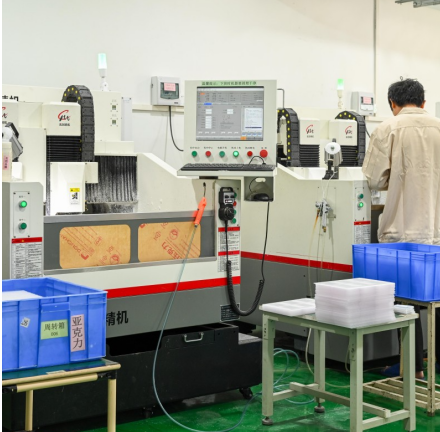
For customized HMI products, engineering development is closely connected with manufacturing. A design that works in concept form must also be translated into a structure that can be produced consistently. Niceone-HMI combines design, engineering development, rapid prototyping, tooling, mass production, assembly, and quality testing within its HMI manufacturing process.
Rapid prototyping is particularly useful when an interface contains customized dimensions, graphics, tactile requirements, circuit layouts, or multiple integrated components. Prototype evaluation can help identify structural or functional issues before production moves forward. This approach also provides a practical way to assess how the interface fits with the equipment housing and electronic system.
The one-stop manufacturing model extends beyond membrane switches. Niceone-HMI combines membrane switch production with silicone keypad molding, plastic housing injection, backlight integration, and circuit fabrication. This integrated structure can simplify the coordination required when several HMI components need to work together as part of one finished interface.
Quality and Material Considerations
Material selection has a direct relationship with the usability and service performance of an HMI. Surface materials influence appearance and resistance to everyday contact, while circuit materials affect electrical functionality. Mechanical structures and sealing components also need to correspond with the environment in which the finished equipment will operate.
Niceone-HMI works with materials and structures including PET and polyester-based interface materials, silicone rubber, PMMA, PC, PVC, flexible circuit materials, and different O-ring configurations. The product portfolio also includes dustproof and waterproof metal dome layers, wear-resistant plastic enclosure structures, and waterproof silicone rubber keypads. These options provide a foundation for developing interfaces according to different mechanical and environmental requirements.
Quality control is incorporated into the manufacturing process through product testing and inspection. Niceone-HMI identifies product testing, raw-material control, rapid prototyping, and quality control as parts of its manufacturing system. Such process-oriented control is important for customized HMI products because consistency in dimensions, electrical performance, appearance, and assembly can affect the final equipment interface.
Applications Across Diverse Equipment
The application range of membrane switches and HMI components continues to expand as electronic controls become more common across different equipment categories. Niceone-HMI serves applications including medical devices, automotive and transportation equipment, aerospace and avionics, defense and UAV systems, agriculture and outdoor equipment, marine and maritime products, and energy and public infrastructure.
Medical equipment, for example, can require clearly defined controls and interfaces that integrate effectively with compact electronic systems. Industrial and transportation equipment may place greater emphasis on tactile operation, structural integration, and durability. Outdoor, marine, and infrastructure applications can introduce additional requirements related to environmental exposure and protection.
The same principle applies to electronic products that require compact user interfaces. Backlit membrane switches can support operation where visual indication is important, while capacitive designs can provide touch-sensitive input. Silicone keypads and graphic overlays offer additional possibilities when a project requires a different balance of tactile feedback, appearance, and mechanical structure.
Developing HMI Solutions for Changing Product Designs
The continued development of automation, electronic equipment, connected devices, and intelligent control systems is changing the role of the physical interface.
Product designers increasingly need interfaces that combine multiple functions while occupying limited space. This creates a need for closer coordination between switching technology, circuitry, materials, mechanical structures, and product appearance.
Niceone-HMI’s manufacturing model reflects this integrated direction. Its focus extends from membrane switches to a broader group of HMI components, while design, prototyping, production, assembly, and testing are connected within one manufacturing process. This enables customized interfaces to be developed around the requirements of different equipment structures rather than treating each component as an isolated product.
With its base in Dongguan, China, Niceone-HMI combines membrane switch manufacturing with the development of silicone products and other HMI components. Its experience in customized products and international business supports projects that require both individual interface components and more integrated HMI configurations.
As equipment manufacturers continue to pursue compact product structures and more integrated controls, membrane switches remain a practical interface option for applications where thin construction, customizable functions, tactile interaction, and reliable electrical performance are required. Niceone-HMI’s combination of membrane switch technology, supporting HMI components, prototyping, manufacturing, and assembly provides a structured approach to developing these interfaces for different product requirements.
More information about Niceone-HMI’s membrane switches, HMI components, manufacturing capabilities, and application solutions is available at https://www.niceone-hmi.com/.
Dongguan NICEONE TECH Technology Co., Ltd.
Dongguan NICEONE TECH Technology Co., Ltd.
email us here
Legal Disclaimer:
EIN Presswire provides this news content “as is” without warranty of any kind. We do not accept any responsibility or liability
for the accuracy, content, images, videos, licenses, completeness, legality, or reliability of the information contained in this
article. If you have any complaints or copyright issues related to this article, kindly contact the author above.

Media gallery