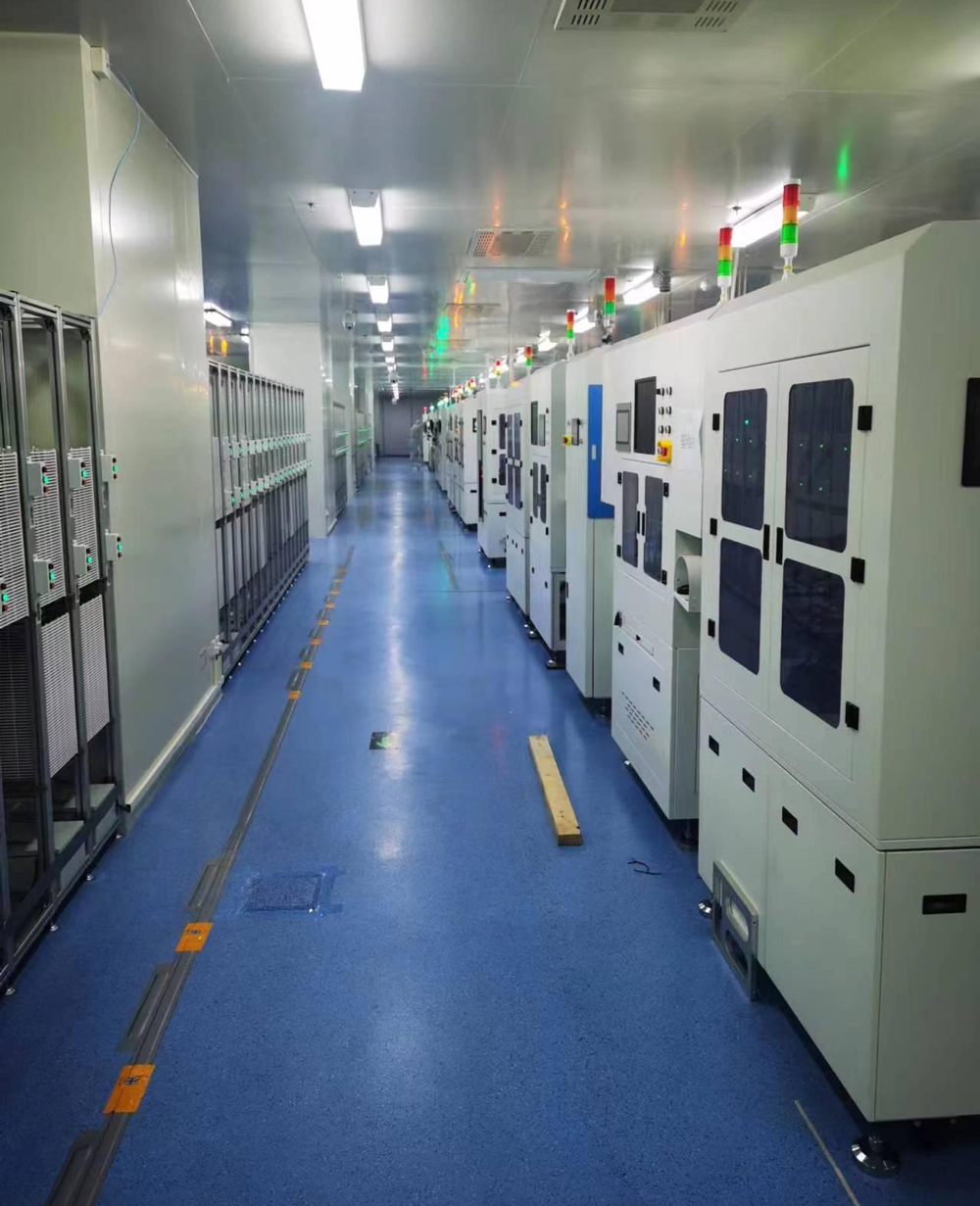

WEZNHOU, ZHEJIANG, CHINA, October 16, 2026 /EINPresswire.com/ — As demand for miniaturized electronic components continues to grow, manufacturers are placing greater emphasis on precision, production consistency, and intelligent manufacturing. Low Temperature Co-fired Ceramic (LTCC) and Multilayer Ceramic Capacitor (MLCC) technologies are important to applications ranging from telecommunications and automotive electronics to industrial control systems and high-frequency devices. Meeting these requirements depends not only on advanced processing technology but also on reliable manufacturing equipment, integrated production capabilities, and continuous technical improvement. Upper Shell combines specialized ceramic manufacturing equipment, intelligent automation solutions, and manufacturing experience to support the evolving needs of LTCC and MLCC producers.
Advanced Ceramic Manufacturing Requires Integrated Solutions
LTCC and MLCC technologies share a foundation in multilayer ceramic processing, but each involves distinct manufacturing requirements. LTCC production integrates ceramic layers with conductive patterns to create compact electronic structures, while MLCC manufacturing focuses on stacking ceramic dielectric layers and internal electrodes to achieve the required electrical characteristics in a small footprint.
Both processes demand accurate material preparation, uniform layer formation, precise printing, controlled stacking, and carefully managed thermal processing. Variations at any stage can affect product consistency, manufacturing yield, and downstream performance.
For equipment buyers, this means that evaluating individual machines is only part of the purchasing decision. Production line compatibility, process coordination, automation capabilities, and technical support can also influence the overall efficiency of a manufacturing operation.
Upper Shell addresses these requirements through equipment and integrated production line solutions designed for different stages of LTCC and MLCC manufacturing. Its portfolio allows manufacturers to evaluate equipment according to their production processes, technical specifications, and capacity requirements rather than relying on a one-size-fits-all configuration.
Upper Shell’s Manufacturing Strength and Industry Experience
A key consideration when selecting a production equipment supplier is its ability to support projects beyond the delivery of individual machines. Manufacturing infrastructure, engineering resources, equipment development capabilities, and quality management all contribute to a supplier’s ability to serve industrial customers.
According to its company information, Upper Shell operates three manufacturing bases in Wenzhou, China, and employs more than 400 people. Its operations include research and development facilities, precision machining workshops, and intelligent automation manufacturing resources. The company also reports 20 years of equipment manufacturing experience.
These capabilities provide a foundation for coordinating equipment development, mechanical manufacturing, system integration, and production line implementation. For customers planning new facilities or upgrading existing production capacity, an equipment supplier with in-house manufacturing and technical resources can offer a more coordinated approach to project requirements.
Upper Shell’s experience across LTCC and MLCC equipment also supports a broader understanding of ceramic processing workflows. Rather than focusing exclusively on a single manufacturing stage, the company provides equipment covering multiple operations, helping customers assess how different production processes can be coordinated within a complete manufacturing environment.
LTCC Equipment for Precision Multilayer Ceramic Processing
LTCC technology is used in applications where compact structures, electrical integration, and high-frequency performance are important. Typical applications include RF modules, antennas, filters, and specialized electronic components.
The manufacturing process generally involves slurry preparation, ceramic tape casting, screen printing, punching, via filling, layer stacking, lamination, and co-firing. Each stage must meet specific dimensional and process requirements to maintain the integrity of the final multilayer structure.
Upper Shell’s LTCC equipment portfolio includes high-precision tape casting machines, sheet-to-sheet screen printing lines, stacking machines, and high-speed punching equipment. These products address important processing stages, from the preparation of ceramic green sheets to the formation and assembly of multilayer structures.
The company’s advantage lies in providing equipment options that can be evaluated as part of a coordinated production workflow. For example, tape casting establishes the foundation for layer thickness and uniformity, while printing and punching influence pattern accuracy and interlayer connectivity. Stacking and lamination then help establish the geometry of the multilayer assembly.
When these stages are properly coordinated, manufacturers can improve process control and reduce the risk of inconsistencies caused by poorly matched equipment settings or production requirements. The appropriate configuration still depends on material properties, component design, required tolerances, and factory capacity.
MLCC Equipment Designed for Demanding Production Requirements
MLCCs are widely used in consumer electronics, automotive systems, telecommunications equipment, and industrial applications. Their compact size and ability to provide capacitance in limited space have made them important components in modern electronic circuits.
As manufacturers pursue thinner dielectric layers and higher component integration, production equipment must support precise material handling, electrode printing, layer stacking, lamination, cutting, and thermal processing.
Upper Shell’s MLCC equipment portfolio includes ultra-thin tape casting machines, roll-to-roll ceramic layer processing equipment, lamination machines, and testing systems. These equipment categories address key requirements in multilayer capacitor manufacturing and allow buyers to assess solutions based on their specific process needs.
Precision is especially important when handling thin ceramic layers. Inconsistent thickness or poor layer alignment may affect manufacturing stability and finished-product quality. Coordinating casting, printing, stacking, and lamination processes can therefore help manufacturers establish more consistent production conditions.
Upper Shell’s specialized equipment range gives customers options for configuring manufacturing processes around their product designs, production formats, and capacity targets. Buyers can evaluate machine specifications, material compatibility, process repeatability, and integration requirements before selecting equipment for a particular facility.
Intelligent Automation and Production Line Integration
In addition to individual processing machines, production line integration is an important consideration for manufacturers seeking to improve operational efficiency. Disconnected equipment can create unnecessary material handling, inconsistent data collection, and delays between production stages.
Upper Shell develops turnkey production line solutions that combine equipment configuration, process optimization, digital monitoring, and manufacturing execution system (MES) integration. Its company information also highlights the use of robotics, AI-assisted production, and real-time data analytics in intelligent manufacturing.
These capabilities can support better coordination between equipment modules, improve production visibility, and help operators identify process deviations. Depending on the system configuration, digital monitoring can provide information about operating conditions and production status, while automation can reduce repetitive manual handling.
The value of an integrated solution depends on the customer’s manufacturing objectives and the compatibility of the equipment, control systems, and production software. Upper Shell’s focus on intelligent automation provides a basis for customers to evaluate broader manufacturing solutions alongside individual machine purchases.
For businesses establishing new production lines, a coordinated equipment and automation strategy can also help clarify installation requirements, process interfaces, operator training, and future expansion plans.
Quality Management and Technical Support for Industrial Buyers
Manufacturing equipment must deliver repeatable results under defined operating conditions. Quality management therefore involves more than inspecting finished machines; it also includes component manufacturing, assembly procedures, testing, documentation, and performance verification.
Upper Shell reports having precision machining workshops and dedicated quality control resources within its manufacturing operations. These facilities support the company’s equipment production and provide an industrial foundation for managing manufacturing consistency.
For buyers, important evaluation criteria include machine positioning accuracy, process repeatability, supported material dimensions, throughput, maintenance requirements, and the availability of technical documentation. Factory acceptance testing and sample production can provide additional evidence that equipment meets the agreed project specifications.
International customers should also confirm the certification and safety documentation applicable to the selected equipment and destination market. Clear acceptance criteria, installation planning, and commissioning arrangements can help reduce uncertainty during equipment implementation.
By combining manufacturing resources with specialized equipment development and production line integration, Upper Shell offers industrial customers a supplier option for evaluating LTCC and MLCC manufacturing projects at both machine and system levels.
Supporting the Future of Precision Electronics Production
The continued development of telecommunications, automotive electronics, and advanced industrial systems is increasing the importance of reliable ceramic component manufacturing. LTCC and MLCC producers must balance precision, material control, manufacturing efficiency, and product consistency as component designs become increasingly demanding.
Upper Shell brings together manufacturing infrastructure, reported two-decade equipment experience, specialized LTCC and MLCC equipment, and intelligent automation capabilities. Its portfolio covers multiple ceramic processing stages and provides options for customers planning equipment upgrades, production line development, or more integrated manufacturing operations.
By evaluating equipment performance, process compatibility, automation requirements, and quality management together, manufacturers can make better-informed decisions about their long-term production strategies. Upper Shell’s combination of specialized equipment and integrated manufacturing solutions positions the company to support customers pursuing greater precision and operational coordination in advanced ceramic production.
For more information about LTCC equipment, MLCC production lines, intelligent manufacturing solutions, and the company’s capabilities, visit the official Upper Shell website. https://www.uppershell.com/
Upper Shell
Upper Shell
+ +86 19519312060
Daniel.Pan@UpperShell.com
Legal Disclaimer:
EIN Presswire provides this news content “as is” without warranty of any kind. We do not accept any responsibility or liability
for the accuracy, content, images, videos, licenses, completeness, legality, or reliability of the information contained in this
article. If you have any complaints or copyright issues related to this article, kindly contact the author above.

Media gallery