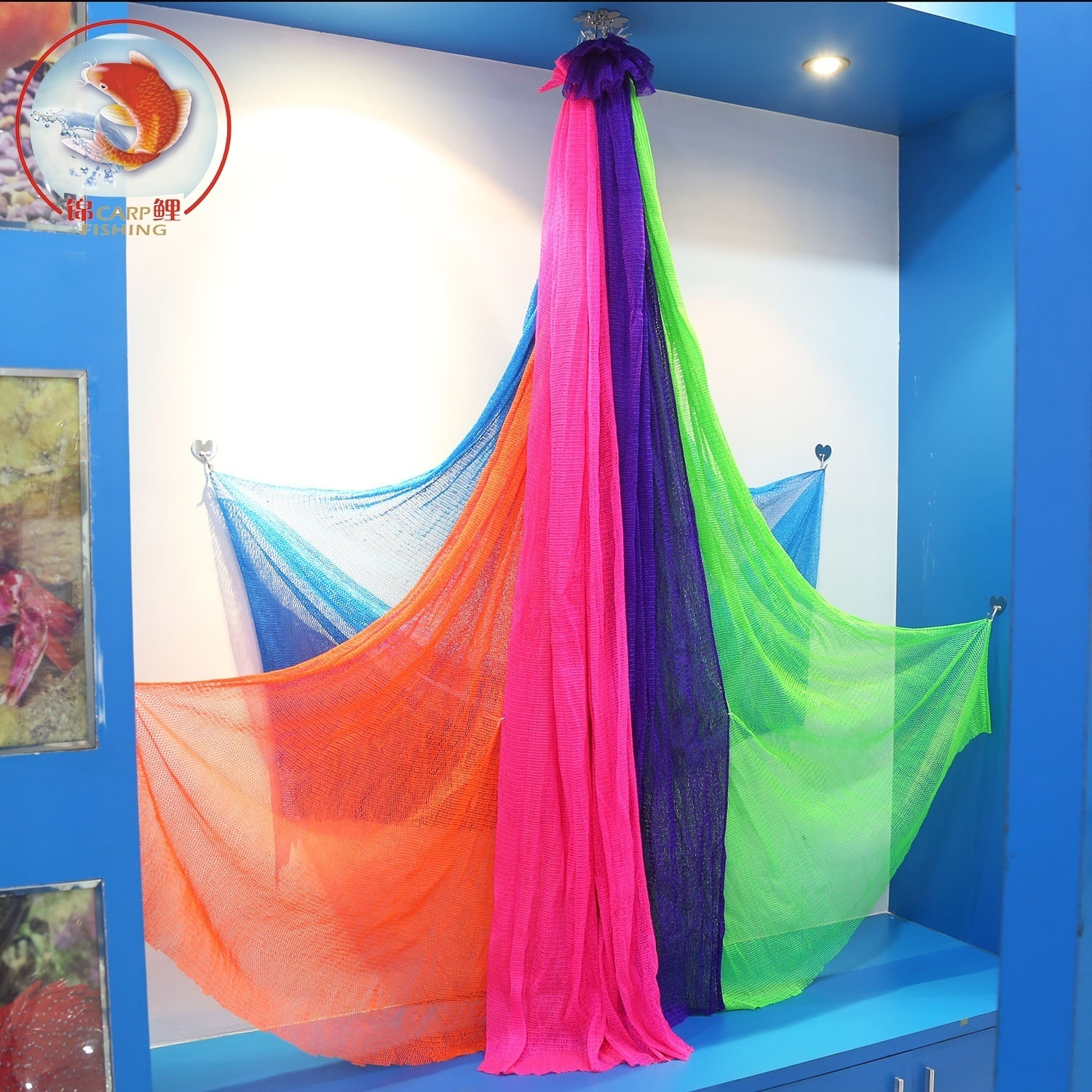

SHANTOU, GUANGDONG, CHINA, November 19, 2026 /EINPresswire.com/ — Securing a dependable wholesale fishing net supply requires commercial importers and distributors to establish rigorous technical specifications, standardized quotation comparisons, and disciplined pre-shipment quality acceptance protocols.
Wholesale gear procurement involves substantial capital investment and complex maritime logistics. Commercial importers who establish clear engineering baselines and disciplined supplier evaluation workflows minimize procurement disputes, prevent costly container rejections, and protect wholesale profit margins across competitive regional fishing markets.
Defining the Exact Netting Scope and Finished Configuration
Commercial netting procurement begins with establishing unambiguous definitions of product configuration. Sourcing teams must distinguish between unfinished bulk netting webbing and fully rigged, ready-to-fish gear assemblies to avoid contractual misunderstandings.
Distinguishing Bulk Netting from Rigged Assemblies
Bulk netting is supplied as continuous machine-woven rolls or compressed bundles, requiring regional net lofts or vessel crews to hang the webbing onto framing lines. Sourcing bulk netting offers substantial freight density advantages and allows local technicians to customize hanging ratios for specific vessels. Bulk webbing imports allow port facilities to maintain versatile material reserves.
Bulk netting purchases give fleet maintenance operations maximum flexibility. Experienced riggers can adjust corkline and leadline spacings to match seasonal species behavior, extending the operational life of existing vessel rigging hardware. Maintaining standardized bulk inventory lowers overall holding costs across coastal service centers.
Establishing Scope Boundaries for Commercial Bids
Rigged assemblies incorporate perimeter ropes, floats, leadlines, and specialized bridle attachments, arriving ready for immediate deployment. Sourcing rigged gear simplifies fleet operations but demands precise factory drawings and comprehensive technical specifications to ensure complete compatibility with vessel deck machinery. Rigged systems reduce vessel preparation time prior to seasonal openings.
Contracts must clearly declare whether floats, leadlines, and border twines are included in unit pricing. Explicit demarcation of rigging components prevents unexpected border assembly surcharges and simplifies customs classification. Itemized boundary definitions ensure transparent cost comparisons between competing bids.
Establishing Precise Material and Dimensional Sizing Conventions
Commercial netting specifications require rigorous, unambiguous definitions across all physical and mechanical parameters. Technical sourcing teams structure their purchase contracts around core engineering specifications to prevent unintended factory substitutions.
Linear Density and Yarn Numbering: Explicit twine designations stating single-ply denier or tex counts alongside total plies to define physical mass, knot volume, and spool runnage across production batches.
Mesh Sizing Conventions: Clear contractual separation between fully extended stretched mesh length and single-bar measurements taken under calibrated tension to eliminate sizing discrepancies.
Polymer Grade and UV Stabilization: Material baselines defining minimum wet knot breaking tenacity, elongation percentages, and thermal heat-setting standards for seawater endurance.
Panel Dimensions and Edge Selvages: Precise mesh counts in depth and length, accompanied by single or double selvage edge reinforcements engineered for framing line attachment.
Standardizing these technical conventions across all inquiry documentation guarantees that competing manufacturing bids reflect identical material standards and physical dimensions. Sourcing teams avoid costly misunderstandings by enforcing standardized parameter sheets with every prospective factory.
Incorporating standardized tolerance clauses, such as plus or minus three percent on stretched length and depth mesh counts, provides clear legal benchmarks for pre-shipment inspections and container acceptance. Verifiable tolerances protect commercial importers during incoming harbor inspections.
Structuring Comparable Commercial Quotations Across Suppliers
Comparing commercial factory quotations requires establishing a uniform bid structure. Inconsistent price quotations that mix varying freight terms, material qualities, or packaging formats create misleading commercial evaluations for procurement directors.
Standardizing Line-Item Quotation Templates
Importers must require suppliers to itemize pricing based on net webbing weight, twine specification, and specific Incoterms, such as FOB or CIF destination port. This breakdown allows buyers to evaluate raw material processing efficiency independently from international freight volatility. Clear itemization reveals whether price variations stem from polymer grade or shipping rates.
Total Landed Cost and Packaging Verification
Packaging specifications directly impact container utilization and landed costs. Buyers must verify whether quotes reflect compressed bale packaging, individual carton boxing, or wooden palletization, ensuring container payload space is utilized efficiently without transit damage. Dense bale packing lowers ocean freight expense per kilogram of finished netting.
Executing a Disciplined Physical Sample Approval Workflow
Physical sample verification represents an essential quality gate prior to releasing commercial volume production. Never authorize container manufacturing based solely on catalog photographs or commercial sales guarantees.
Operating under the established commercial brand CARPFISHING, the enterprise maintains rigorous sample preparation protocols, providing overseas importers with verified pre-production webbing swatches for comprehensive technical evaluation.
Pre-Production Mesh Verification Protocols
Pre-production sample swatches must be evaluated for knot tightness, mesh opening symmetry, wet knot breaking tenacity, and heat-setting stability. Submerging sample webbing in seawater verifies that knot geometry remains stable without slippage under dynamic tension. Laboratory tensile testing confirms that knot breaking strength satisfies contract benchmarks.
Retaining a signed, sealed golden sample from approved pre-production lots establishes an indisputable physical benchmark. This reference sample governs pre-shipment inspections and protects buyers during incoming container acceptance at coastal destination ports. Retained swatches eliminate disputes regarding color, hand feel, and knot firmness.
Defining Pre-Shipment Quality Acceptance and Tolerance Protocols
Commercial purchase agreements must define objective quality acceptance criteria, acceptable quality limits, and inspection protocols prior to final factory dispatch and bill of lading release.
Acceptable Quality Limits and Dimensional Checks
Inspection protocols should establish specific tolerance thresholds for mesh dimensions, linear twine density, and overall panel weight, typically allowing no more than plus or minus three percent variance across volume production runs. Technicians measure stretched mesh lengths under calibrated tension across multiple random panel sections.
Factory Traceability and Documentation Handover
Pre-shipment inspection reports must document knot integrity, selvage alignment, and bale packaging security, accompanied by certified tensile testing records. These inspection documents verify that delivered cargo matches contractual specifications. Comprehensive documentation protects importers against customs delays and cargo disputes.
Submitting a Comprehensive Commercial Net RFQ
Commercial importers establish productive manufacturing partnerships by submitting structured requests for quotation that consolidate all operational, technical, and commercial parameters into unified documentation.
Consolidating Technical Parameters for Factory Review
Providing clear bills of materials, target delivery timelines, packaging preferences, and required port destinations enables factory engineering teams to provide transparent, line-item quotations and reliable production schedules. Detailed documentation accelerates order processing and prevents production delays.
Commercial importers, regional distributors, and fleet purchasing managers can review available netting specifications, discuss custom manufacturing programs, and initiate volume quotations directly at https://www.styhcarpfishing.com/ to advance their wholesale procurement programs.
CARPFISHING
CARPFISHING
Legal Disclaimer:
EIN Presswire provides this news content “as is” without warranty of any kind. We do not accept any responsibility or liability
for the accuracy, content, images, videos, licenses, completeness, legality, or reliability of the information contained in this
article. If you have any complaints or copyright issues related to this article, kindly contact the author above.

Media gallery